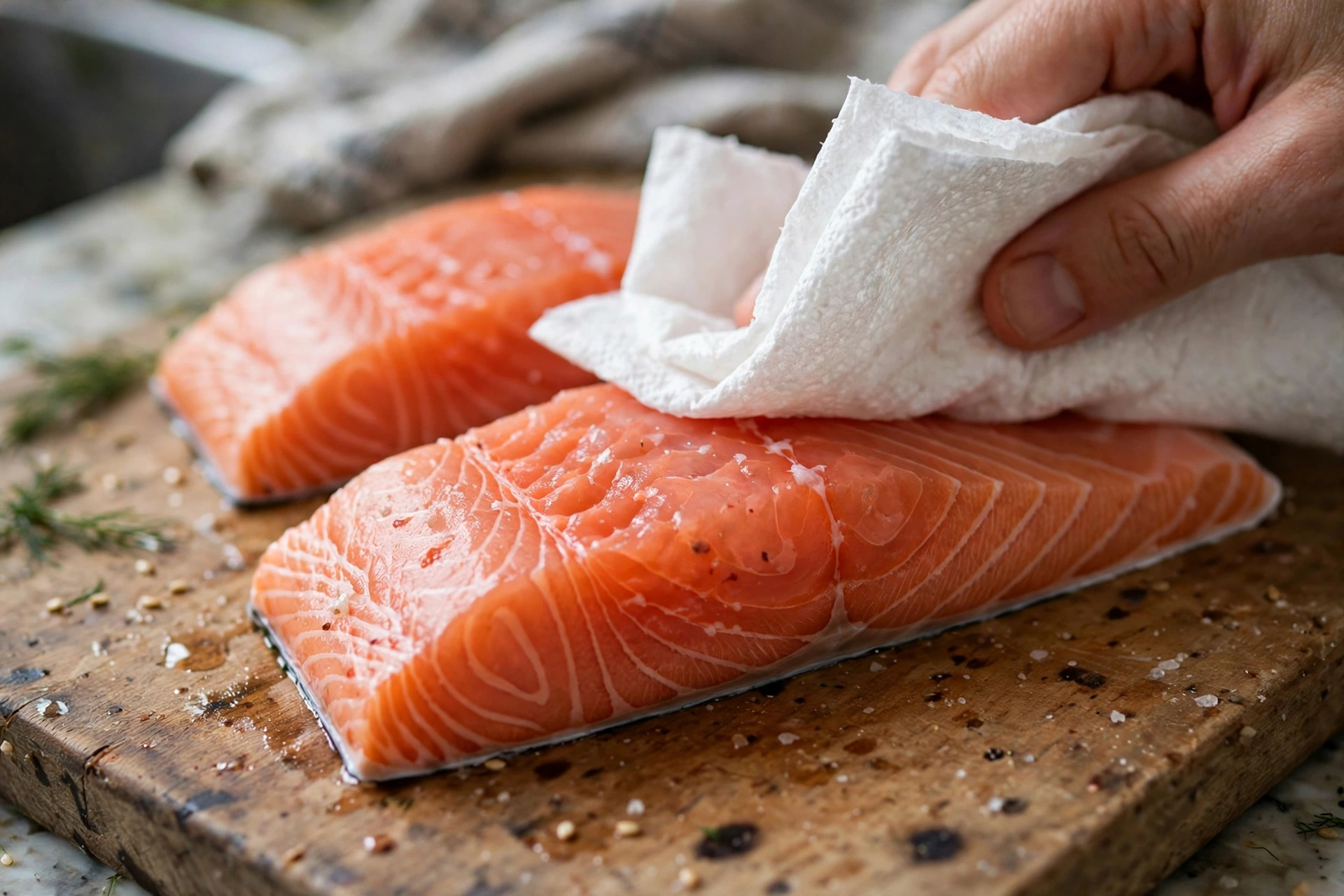
STEP 1 • PREP
Pat it dry
Take salmon out of the fridge, pat the fillets completely dry. Dry skin crisps, wet skin steams.
 GoAirFry
← Crispy air fryer chicken • Fries time & temp → • Best air fryer for families →
Follow the photos, not just the text — each step is a different moment, not the same photo again.
Take salmon out of the fridge, pat the fillets completely dry. Dry skin crisps, wet skin steams.
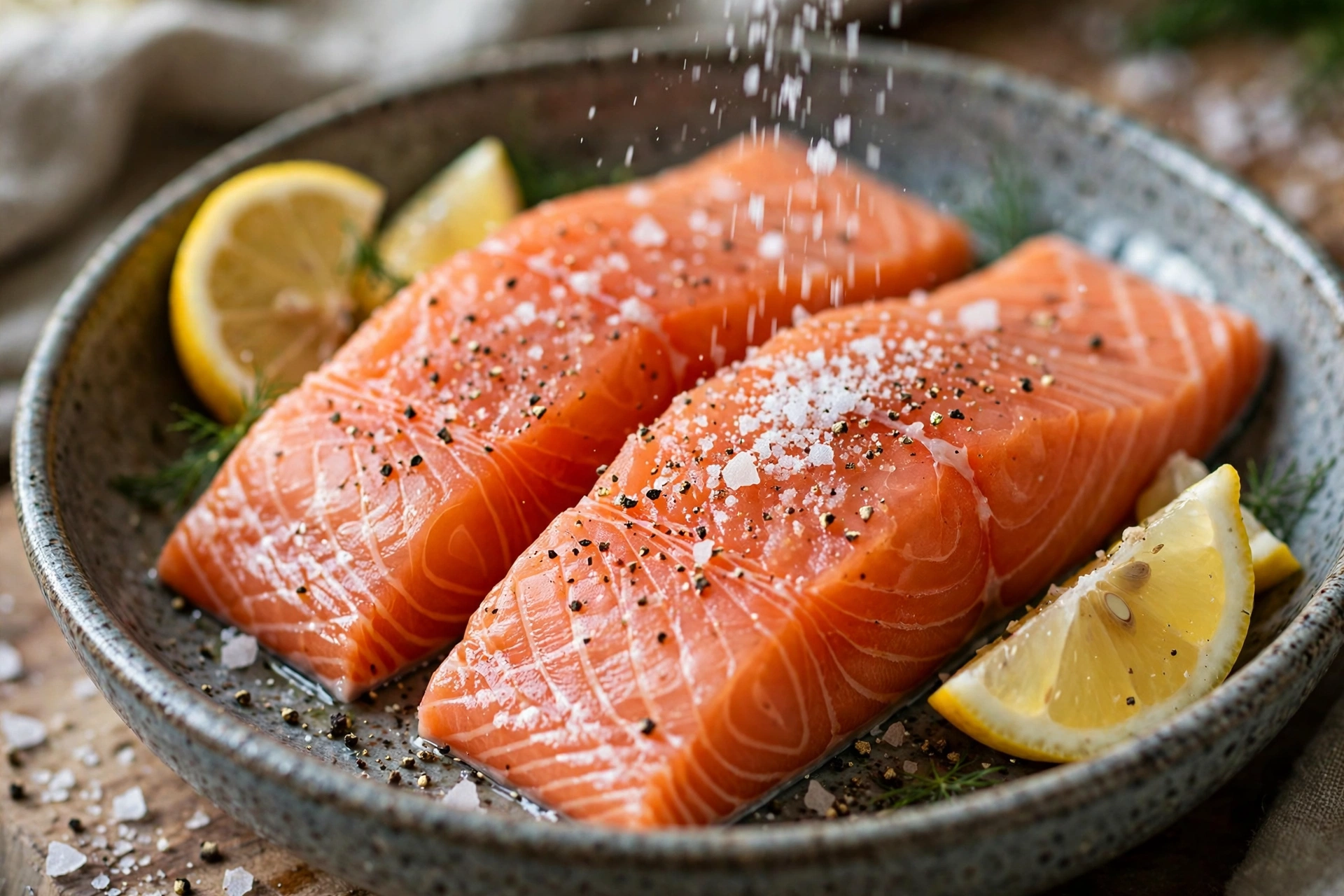
Oil, salt, pepper and lemon. Season all sides, skin included, just before cooking.
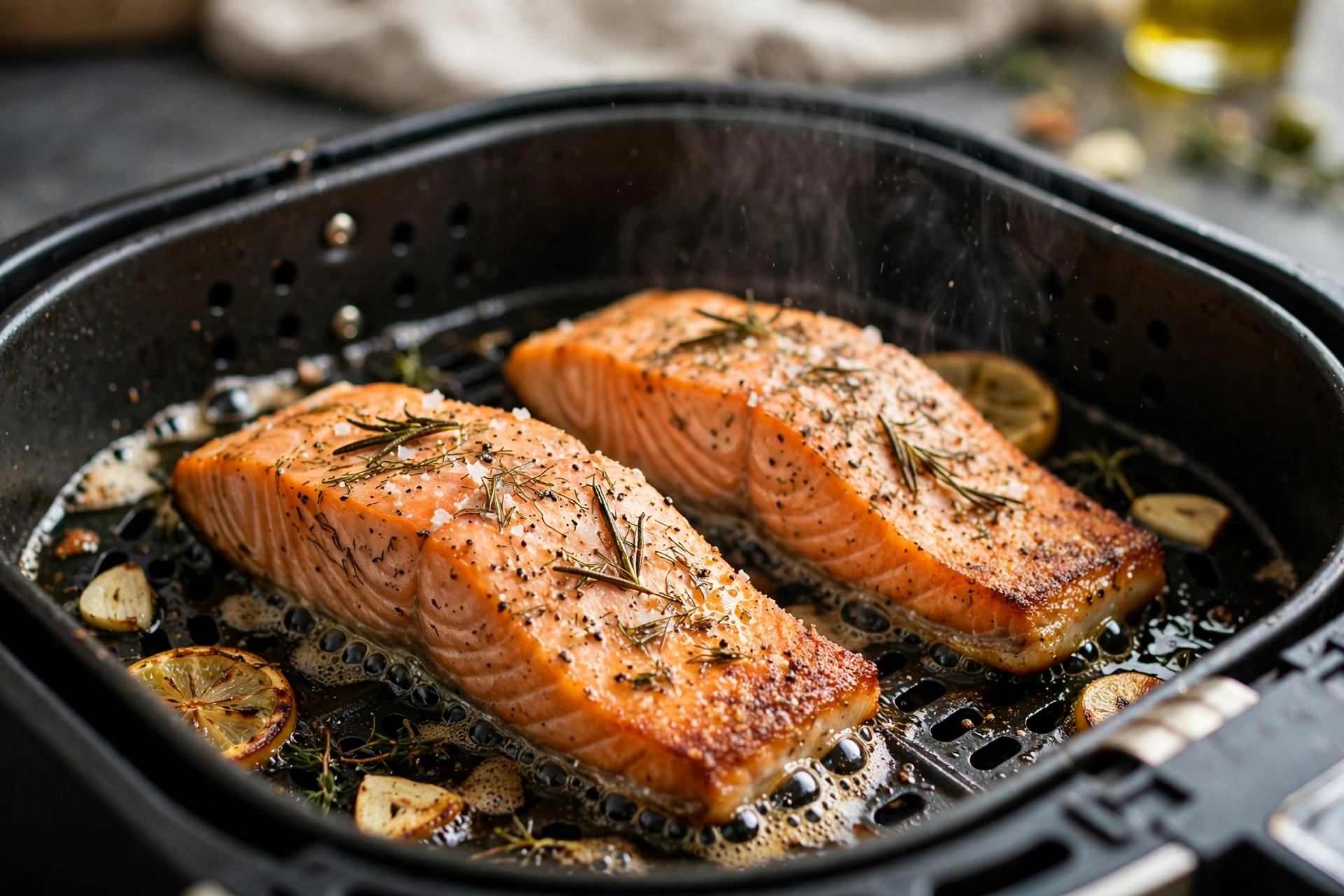
380°F / 193°C, single layer, no flipping needed for most fillets. Check at 10 minutes.
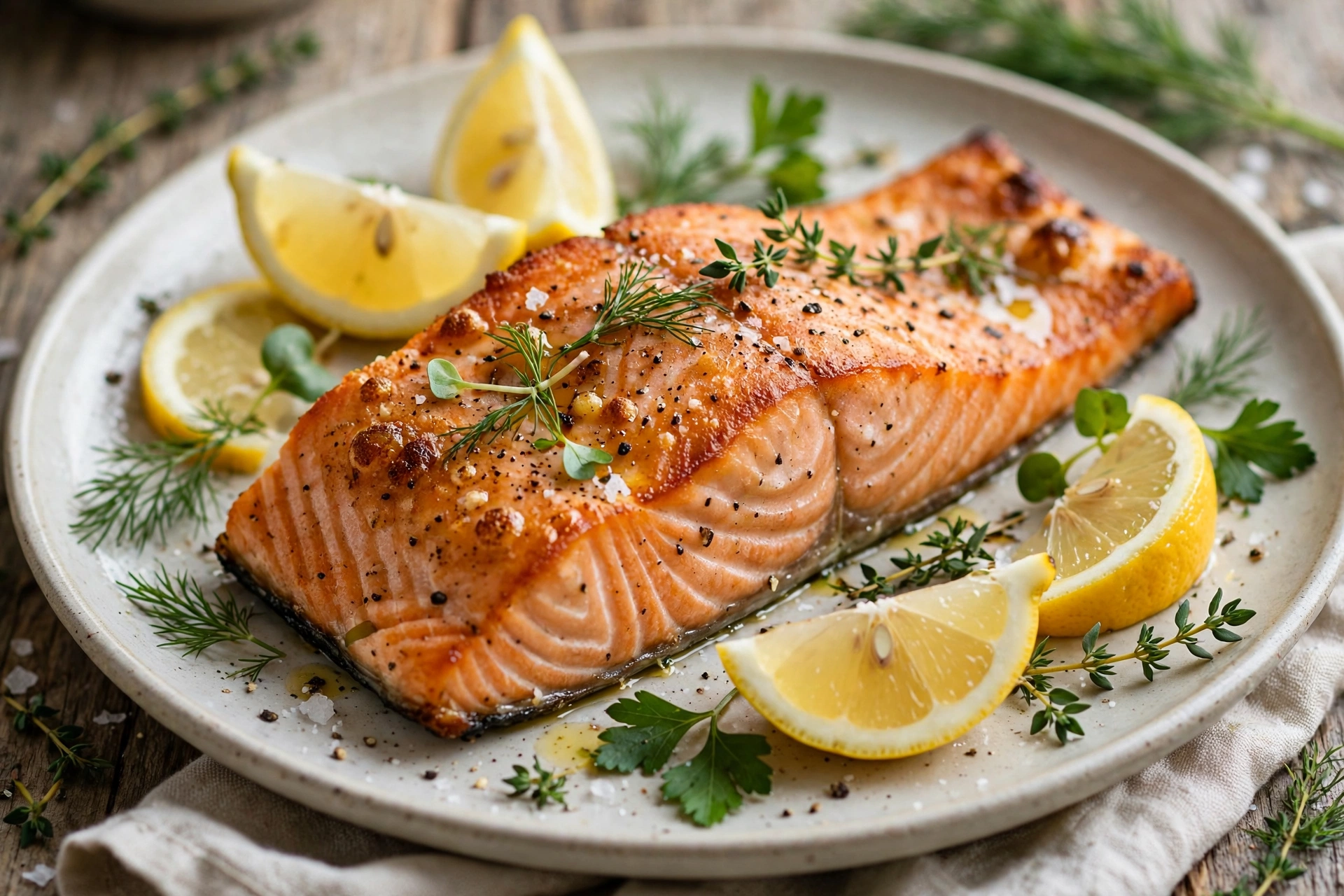
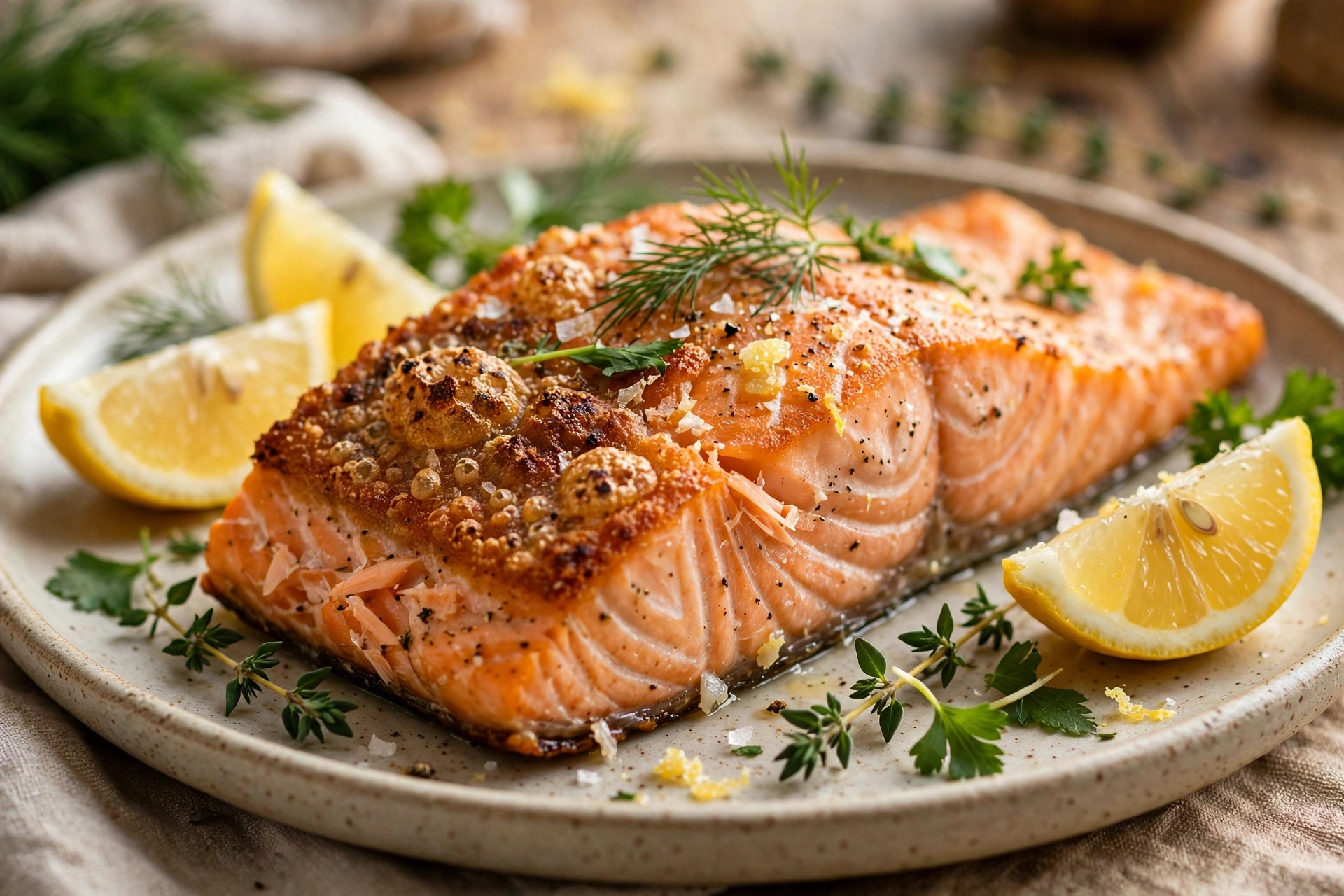
Rest, then serve with lemon. Internal temp should be 145°F / 63°C and the flesh should flake easily.
| Question | Answer |
|---|---|
| Best air fryer temp | See the recipe meta card above - US temp first, Celsius in brackets |
| Internal temp / doneness check | Check with a thermometer, not colour alone - see the time/temp table below |
| Single layer or crowded? | Single layer, always - crowding steams food instead of crisping it |
Measure at the thickest point. A thin tail piece and a thick centre-cut fillet from the same fish can be 3 minutes apart, so check each piece, not just the batch.
| Fillet thickness | Temp | Time (skin-on) | Notes |
|---|---|---|---|
| ¾ inch (2 cm) | 380°F / 193°C | 8–10 min | Check at 8 min — thin fillets go fast |
| 1 inch (2.5 cm) | 380°F / 193°C | 10–12 min | The most common supermarket fillet |
| 1¼ inch (3 cm) | 380°F / 193°C | 12–14 min | Centre-cut, very juicy if not overcooked |
| 1½ inch (3.8 cm) | 380°F / 193°C | 14–16 min | Check at 14 min, then every minute |
| Skinless, 1 inch | 380°F / 193°C | 9–11 min | Oil the basket lightly and flip gently once, halfway |
| From frozen, 1 inch | 380°F / 193°C | 16–20 min | Season after 5 min when the surface thaws; texture is less good |
Skin-on wins for the air fryer. The skin acts as a barrier, so the flesh underneath stays moist, and it crisps into something worth eating rather than peeling off. Cook it skin-side down and do not flip it. If the skin sticks, it usually means the basket was cold or the skin was wet — preheat and pat dry, and it releases much more easily.
Skinless is fine, with two changes. Lightly oil the basket or use a small piece of parchment made for air fryers, and flip once halfway so both sides cook evenly. Skinless fillets dry out faster, so pull them at the lower end of the time range and check early. For glazed salmon, skinless is actually easier, because the glaze can coat all sides — see the variations below.
Crispy roast potatoes, rice, a green salad, roasted vegetables, or air fryer fries. If you cook salmon and a side at once, a dual basket air fryer is genuinely useful here — salmon in one basket, vegetables or potatoes in the other, finishing together.
Store cooked salmon in the fridge for up to 2 days. Reheat gently at 300°F / 150°C for 3–4 minutes, just until warm. Cold leftover salmon is also excellent flaked into salads and wraps.
Salmon is unforgiving because the window between juicy and dry is only a few minutes wide, and an air fryer narrows that window in your favour. Hot air circulating around a single layer cooks the fillet evenly from all sides, while the skin underneath protects the flesh and crisps against the hot basket. Cooking at 380°F / 193°C, slightly lower than chicken, gives the centre time to catch up without the top drying out.
Salmon: Atlantic salmon is the most common supermarket fillet, mild and fatty, and it forgives a minute of overcooking better than leaner fish. Sockeye and other wild salmon are leaner, deeper in colour and stronger in flavour, so pull them a minute earlier and check at the shortest time. Fillets should be similar in thickness; if one is a thin tail piece, cook it separately or accept that it will finish first. Frozen fillets work, but thawed salmon tastes noticeably better, so thaw in the fridge overnight when you can.
Oil and seasoning: A light olive oil rub helps the seasoning stick and the skin release, but fatty salmon needs less oil than chicken. Keep the seasoning simple the first time — garlic powder, paprika, salt and pepper let the fish lead. Dill, lemon zest and capers suit salmon particularly well, while heavy, sweet glazes should wait until the last two to three minutes, because honey, maple and teriyaki burn quickly at 380°F / 193°C.
You need an air fryer, a food thermometer, tongs or a fish slice, and paper towels. A 5–6 qt basket fits four fillets in a single layer; a 4 qt basket will need two batches, which is fine because salmon only takes about twelve minutes. A dual basket helps here — salmon in one basket, a side in the other. For help choosing, see our best air fryer guide and the foods time and temp guide.
A 1-inch fillet takes 10–12 minutes at 380°F / 193°C, skin-side down. Thinner fillets take 8–10 minutes and thicker ones 12–16 minutes, so measure at the thickest point and check early rather than trusting one time for every fillet.
380°F / 193°C is the sweet spot. It is slightly lower than chicken because salmon dries out faster, and it gives the centre time to cook without the top drying. The safe internal temperature is 145°F / 63°C in the thickest part.
Skin-on salmon: no, cook it skin-side down the whole time so the skin crisps and protects the flesh. Skinless salmon: yes, flip it once halfway, gently, so both sides cook evenly and it does not stick to the basket.
Skin-on wins in the air fryer. The skin acts as a barrier, keeps the flesh moist, and crisps into something worth eating. Skinless is fine for glazed salmon, where the glaze can coat all sides, but it dries out faster and needs a light oil rub.
Yes — a 1-inch frozen fillet takes about 16–20 minutes at 380°F / 193°C, seasoning after five minutes when the surface has thawed. Thawed salmon still tastes better, so thaw in the fridge overnight when you have time.
Check 145°F / 63°C with a thermometer in the thickest part, or check that the flesh flakes easily with a fork and looks opaque through most of the fillet.
Almost always overcooking by a few minutes, cooking too hot, or using thin fillets at a time meant for thick ones. Drop to 380°F / 193°C, check at the shortest time, and use a thermometer — salmon goes from perfect to dry very quickly.
Pat the skin completely dry, preheat the basket, cook skin-side down, and do not flip it or crowd the basket. Wet skin steams, a cold basket sticks, and crowded fillets steam instead of crisping, so all three steps matter.
In a dual basket, yes — salmon in one basket, vegetables in the other, timed to finish together. In a single basket, cook hardy vegetables first or alongside the salmon only if everything fits in a single layer without touching.
Reheat gently at 300°F / 150°C for 3–4 minutes, just until warm. Salmon reheats less well than chicken, so cold leftover salmon in salads and wraps is often the better option, and avoid reheating it more than once.
Salmon is rich in omega-3 fats and protein, and air frying adds very little oil, so it is a genuinely healthy weeknight meal. The cooking method does not change the fish itself, but it does mean you are not adding the fat of pan-frying or deep-frying to an already nutritious food.
Rice, roast potatoes, roasted vegetables, a green salad, and air fryer fries all work. A squeeze of lemon and fresh dill just before serving lifts the flavour more than any complicated sauce.
Yes, for up to two days in the fridge, ideally eaten cold in salads and wraps or gently reheated. Salmon does not freeze and reheat as well as chicken, so cook only what you will eat in the next two days and keep sauces separate until serving.
A 5–6 qt basket fits four fillets in a single layer, which serves four people. A smaller basket works for one or two fillets, and a dual basket is the best choice if you regularly cook salmon and a side at the same time.
As an Amazon Associate, GoAirFry earns from qualifying purchases through links on this page, at no extra cost to you. Always check the retailer's site for the final price.