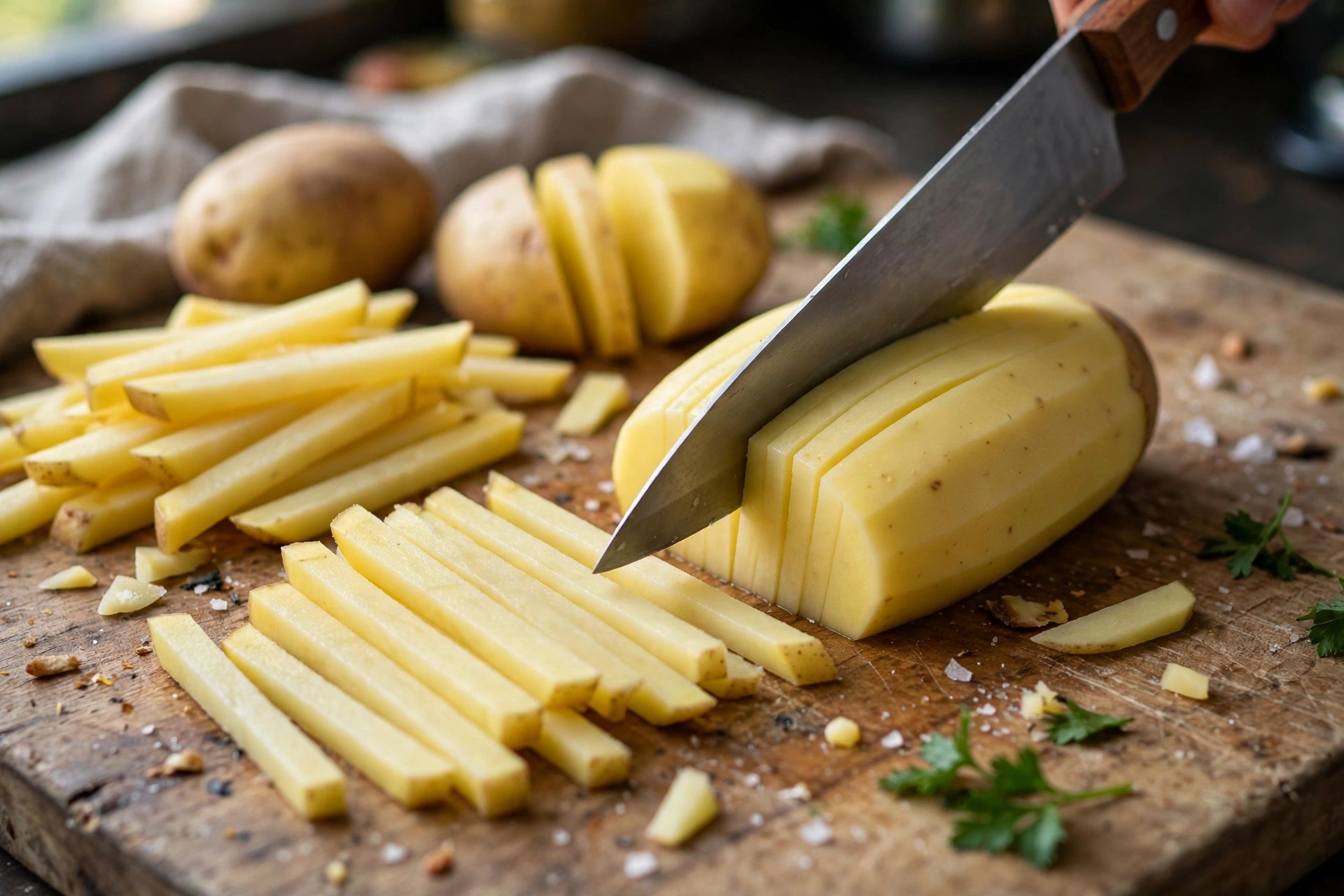
STEP 1 • CUT
Cut evenly
¼ inch thick, even cuts. Uneven fries cook unevenly — thin ones burn, thick ones stay soft.
 GoAirFry
All food times & temps → • Serve with crispy chicken →
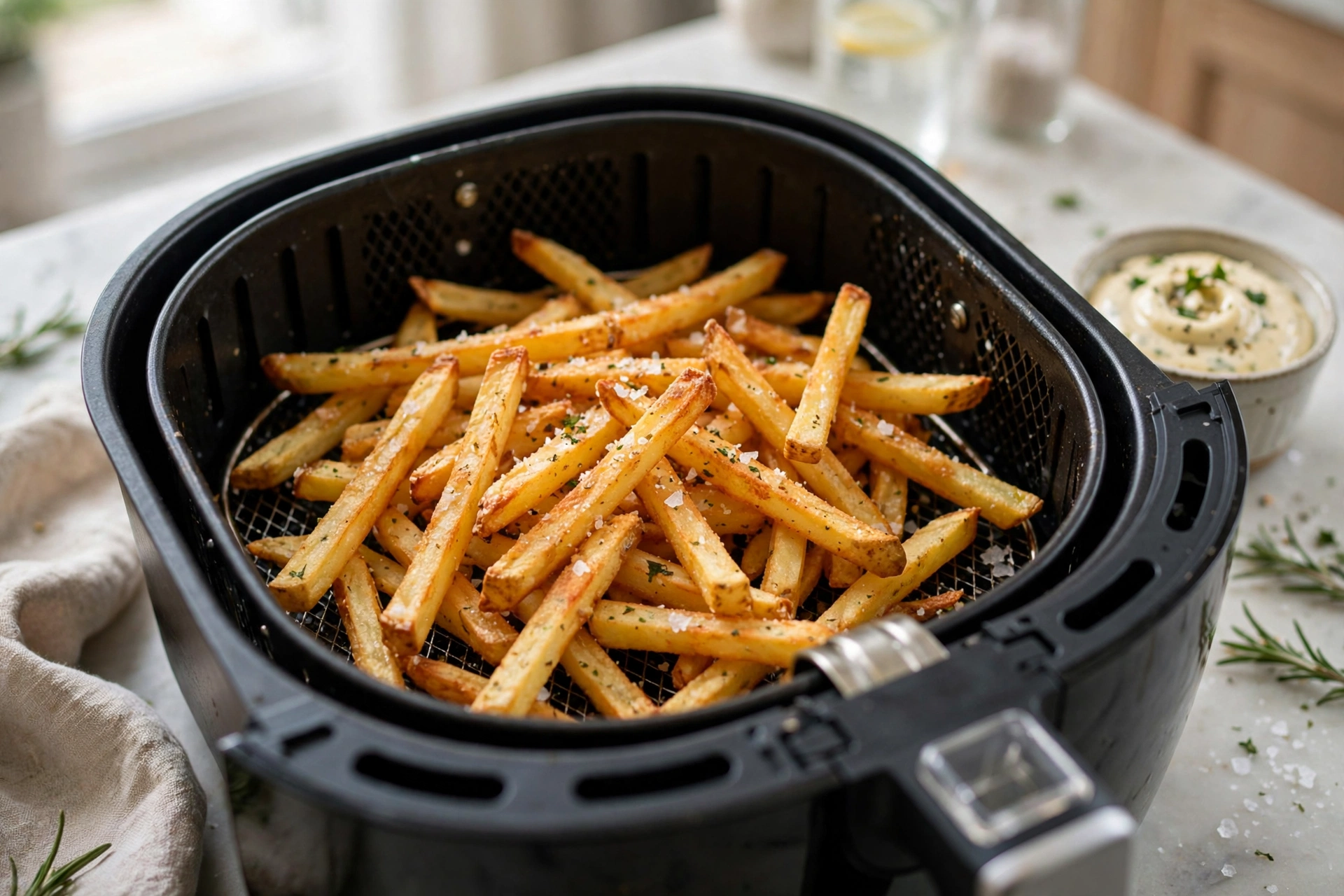
Each step is a different moment — no repeated hero photo, no machine photo.
¼ inch thick, even cuts. Uneven fries cook unevenly — thin ones burn, thick ones stay soft.
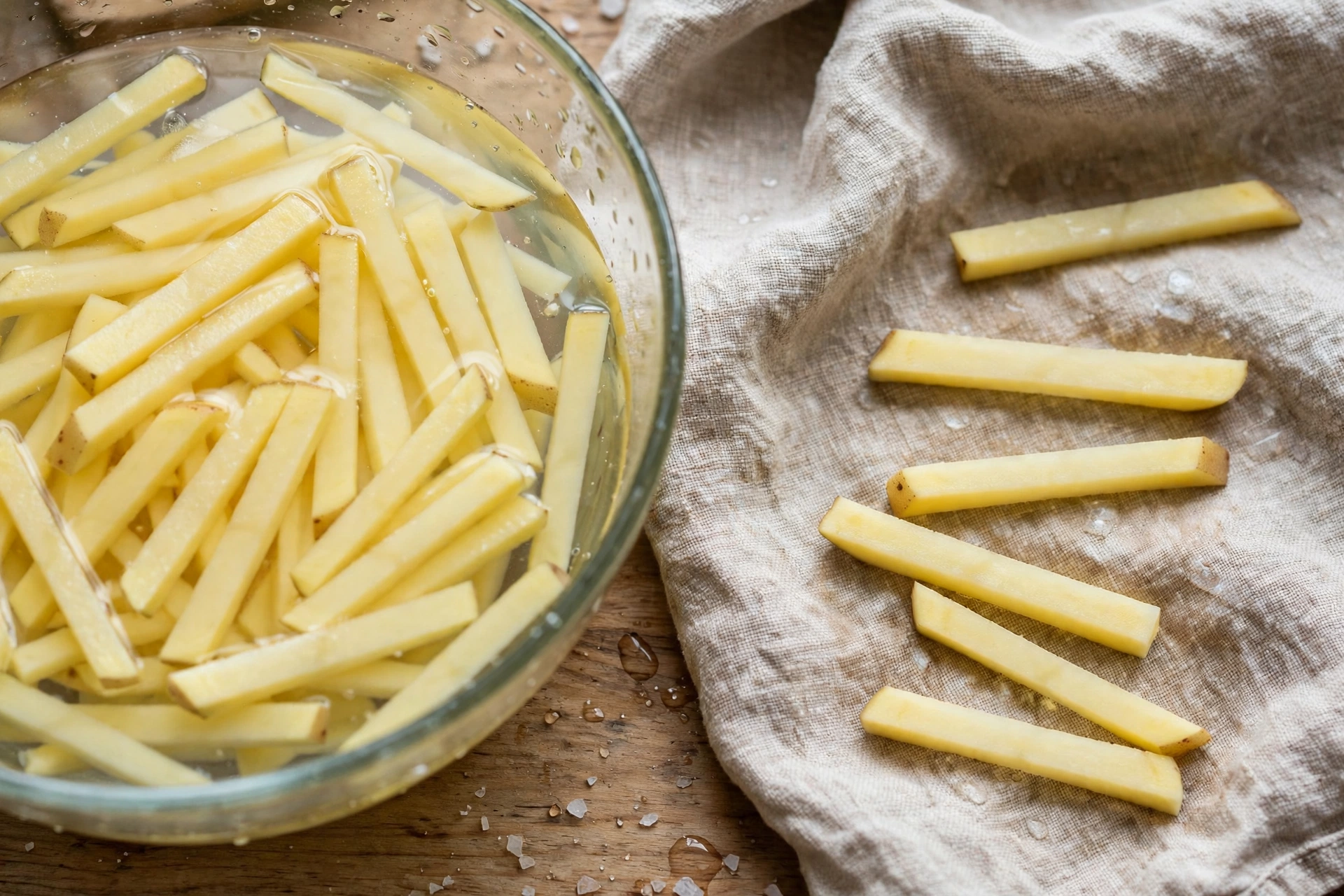
Soak fresh fries in cold water, rinse, then dry completely. Wet fries steam.
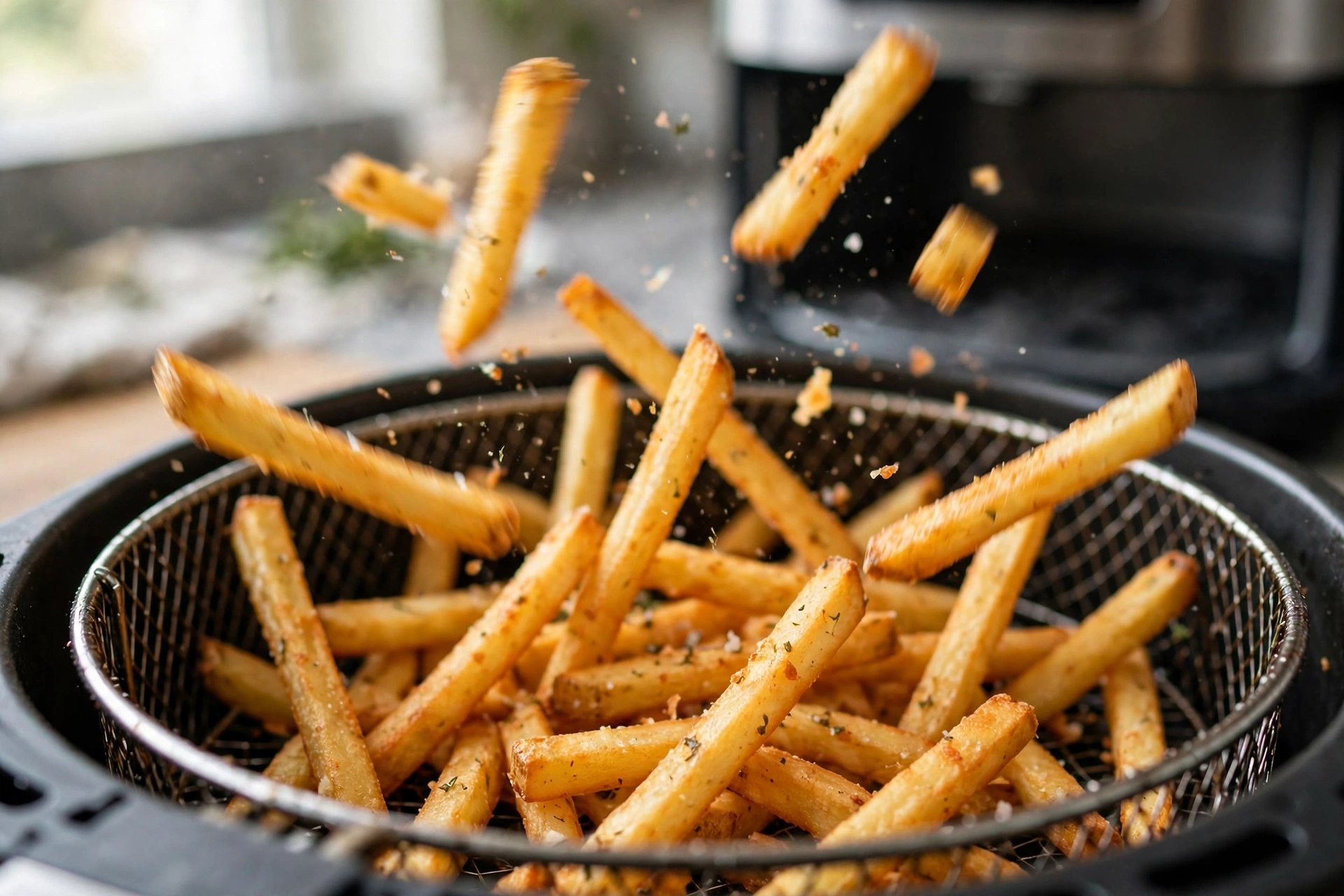
Single layer, light oil, shake every 5 minutes so all sides crisp.
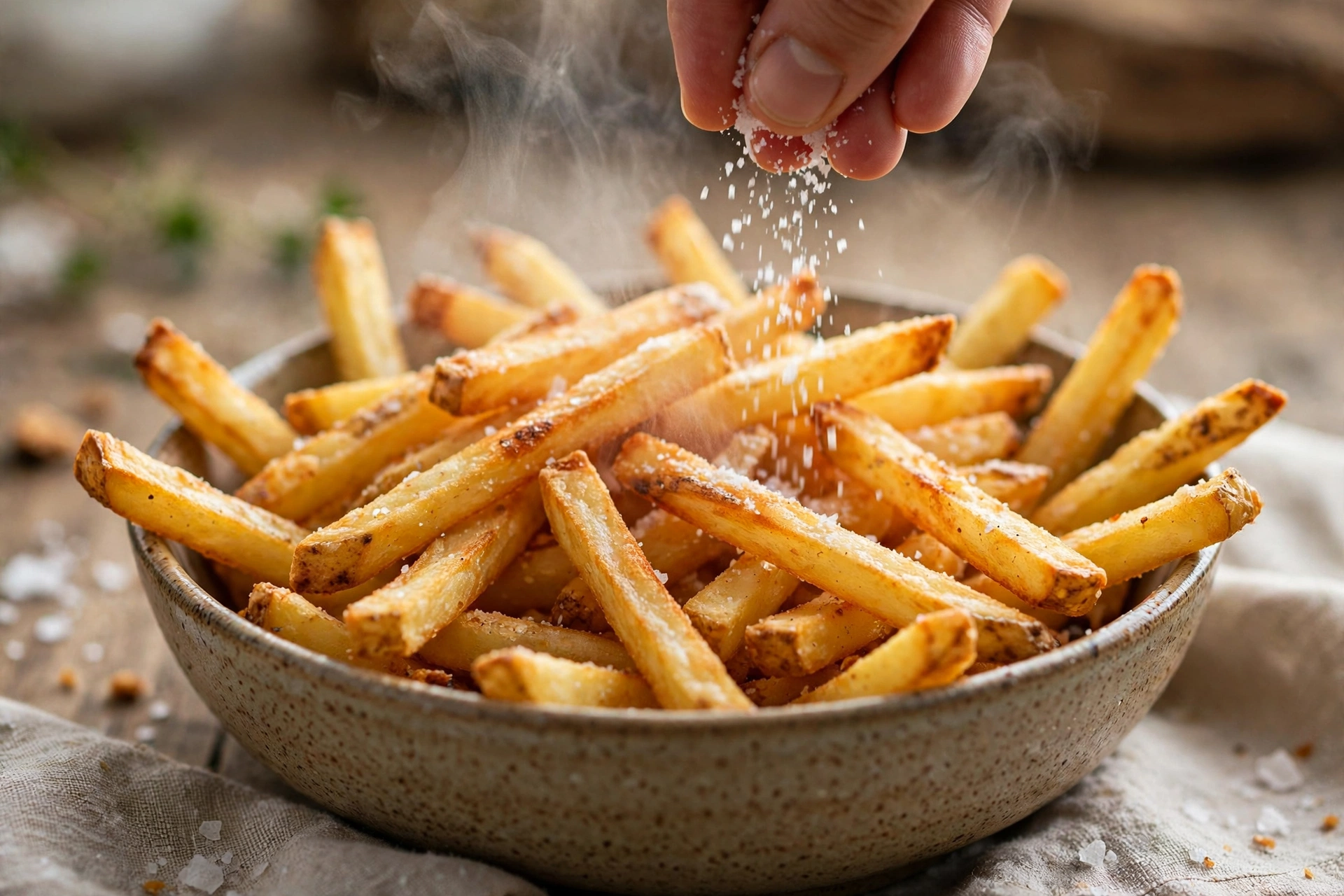
Season after cooking, not before — salt draws out water and fine spices burn.
| Question | Answer |
|---|---|
| Best air fryer temp | See the recipe meta card above - US temp first, Celsius in brackets |
| Internal temp / doneness check | Check with a thermometer, not colour alone - see the time/temp table below |
| Single layer or crowded? | Single layer, always - crowding steams food instead of crisping it |
Do not thaw them. Cook straight from frozen at 400°F / 200°C for 15–20 minutes, shaking every 5 minutes. Thin shoestring fries are done in 12–15 minutes; thick steak fries need 20–25. A light spray of oil helps, but most frozen fries already have oil on them.
Cut them thinner than regular fries, about ⅛–¼ inch, because sweet potato burns faster. Toss with 1 tablespoon oil and a little cornstarch (1 teaspoon per potato) for extra crunch. Cook at 390°F / 199°C for 15–18 minutes, shaking often, and watch the last 3 minutes closely.
| Fries | Temp | Time |
|---|---|---|
| Fresh, thin cut | 400°F / 200°C | 18–22 min |
| Fresh, thick cut | 400°F / 200°C | 22–28 min |
| Frozen, thin | 400°F / 200°C | 12–15 min |
| Frozen, regular | 400°F / 200°C | 15–20 min |
| Frozen, steak cut | 400°F / 200°C | 20–25 min |
| Sweet potato | 390°F / 199°C | 15–18 min |
Classic salt + vinegar, garlic parmesan, Cajun, chilli lime, truffle parmesan, or loaded fries with cheese and spring onions. For loaded fries, cook the fries first, then add toppings and cook 2 more minutes to melt.
Crispy fries are about removing water and giving starch room to brown. Soaking fresh potatoes pulls surface starch off, so the outside dries out and crisps instead of turning gummy. Drying them again after soaking does the same job a second time. A single layer lets hot air reach every side, and shaking every five minutes turns each fry so no side stays pressed against the basket and steams. Salt goes on last because salt draws water out — salted early, fries go soft before they ever get crisp.
Potatoes: Russets, also called Idaho potatoes, are the best choice for fresh fries because they are high in starch and low in moisture, so they go fluffy inside and crisp outside. In the UK, Maris Piper and King Edward do the same job and are what most chip shops would reach for. Waxy potatoes, including most red and new potatoes, stay softer and are better for roast potatoes or salads than for fries. If you only have waxy potatoes, cut them thinner and cook them a little longer, but expect a softer result.
Oil: One tablespoon per two large potatoes is enough. Olive oil, sunflower oil and avocado oil all work; the point is a thin, even coat, not a pool in the bottom of the basket. Spray oil is convenient, but a light brush of plain oil is the safer daily habit for non-stick coatings.
Seasoning: Fine salt sticks best when the fries are hot and just out of the basket. Coarse sea salt looks good but bounces off. Garlic powder, paprika and parmesan should also go on after cooking, because fine powders burn at 400°F / 200°C over twenty minutes. For UK readers, these are chips, not crisps — and the classic chip-shop finish is salt and malt vinegar, added right at the end so the vinegar does not make them soggy.
Fresh fries taste better and let you control the cut, the oil and the salt, but they take an extra thirty minutes for soaking and drying. Frozen fries are the weeknight answer: they are already cut evenly, blanched and lightly oiled, so they crisp reliably straight from the freezer in 15–20 minutes. Do not thaw frozen fries — thawing makes them wet and limp. The trade-off is flavour and salt: frozen fries are usually salted already, so taste before adding more. For guests, go fresh; for a fast weeknight dinner, frozen is the honest, good choice.
You need an air fryer, a sharp knife or a fry cutter, a bowl for soaking, and clean tea towels for drying. A 5–6 qt basket cooks fries for four in one batch; a 4 qt basket will need two batches — keep the first batch warm in a low oven. A dual basket air fryer is ideal here — fries in one basket and chicken or salmon in the other, finishing together. For the full picture, see our best air fryer guide and the foods time and temp guide.
Fries are a side, so plan the main first and work backwards: cook fries first and keep them warm, or use a dual basket so everything finishes together. They go with burgers, chicken, salmon, steak and fish, and they are the base for loaded fries — cook plain, then add cheese, spring onions or chilli and cook two more minutes to melt. For meal prep, par-cook fresh fries for ten minutes, cool them, and freeze them in a single layer on a tray before bagging; they reheat from frozen in about twelve minutes and come out nearly as good as fresh. Leftover cooked fries reheat best in the air fryer at 375°F / 190°C for 3–4 minutes — the microwave will make them soft, so skip it.
| Problem | Fix |
|---|---|
| Soggy fries | Single layer, dry fully, shake every 5 minutes, cook in batches |
| Burnt outside, raw inside | Cut thinner and more evenly, drop to 390°F / 199°C |
| Sticking together | Toss in oil before cooking, do not overfill the basket |
| Sweet potato fries burn | Cut thinner, use 390°F / 199°C, watch the last 3 minutes |
Fresh fries take 18–22 minutes at 400°F / 200°C, frozen fries 15–20 minutes, and sweet potato fries 15–18 minutes at 390°F / 199°C. Shake the basket every five minutes and check from the shortest time, because thickness and basket size change the result more than the recipe does.
400°F / 200°C is the standard for fresh and frozen potato fries. Sweet potato fries do better slightly lower, at 390°F / 199°C, because their extra sugar browns faster and burns if you cook them at full heat for the whole time.
For fresh fries, yes — 30 minutes in cold water removes surface starch and is the biggest single upgrade you can make. Rinse, then dry them completely. Frozen fries should never be soaked or thawed; cook them straight from the freezer.
Soak fresh fries, dry them fully, oil them lightly, cook in a single layer, shake every five minutes, and salt after cooking. Crowding the basket is the most common cause of soggy fries, so cook in batches rather than piling them in.
Yes, most frozen fries already carry oil and crisp well with no extra oil at all. A light spray can help very lean or thin fries, but it is optional, and adding too much oil is what makes frozen fries greasy rather than crisp.
Russets (Idaho) in the US and Maris Piper or King Edward in the UK, because they are high in starch and low in moisture. Waxy potatoes stay softer, so if that is all you have, cut them thinner and accept a less crisp result.
Cut them about ¼ inch thick and as even as you can manage. Uneven fries are the reason one end of the batch burns while the other is still pale — the thick pieces need more time, so sort them by size if you cannot cut them evenly.
In a dual basket, yes — fries in one basket, chicken in the other, timed to finish together. In a single basket, cook the fries first and keep them warm, then cook the chicken, because crowding both together steams them instead of crisping them.
Sweet potatoes contain more sugar than regular potatoes, so they brown and burn faster at high heat. Cut them thinner, cook at 390°F / 199°C instead of 400°F / 200°C, shake often, and watch them closely for the last three minutes.
Reheat at 375°F / 190°C for 3–4 minutes in a single layer, shaking once. They come back surprisingly crisp, unlike microwaved fries, which go soft. Do not reheat fries more than once, and add fresh salt after reheating.
Yes, because they use about a tablespoon of oil instead of a pot of it, so they are usually much lower in fat. The potato itself still matters — fries are still fries — but as a side dish, air fryer fries are a genuinely lighter version of the same food.
Nothing in the cooking method — fries in the US and chips in the UK are the same food, just cut thicker in the UK tradition. Thick-cut chips need 22–28 minutes at 400°F / 200°C, while thin US-style fries need 18–22 minutes, so adjust time to the cut, not the name.
About two large potatoes' worth in a 5–6 qt basket, in a single layer. That serves roughly four people as a side. For more, cook in batches and keep finished fries warm in a low oven, or use a dual basket and split the batch across both baskets.
Yes — par-cook fresh fries for ten minutes, cool them, freeze them in a single layer on a tray, then bag them. They cook from frozen in about twelve minutes and taste nearly as good as fresh, which makes them a useful freezer staple for busy nights.
As an Amazon Associate, GoAirFry earns from qualifying purchases through links on this page, at no extra cost to you.