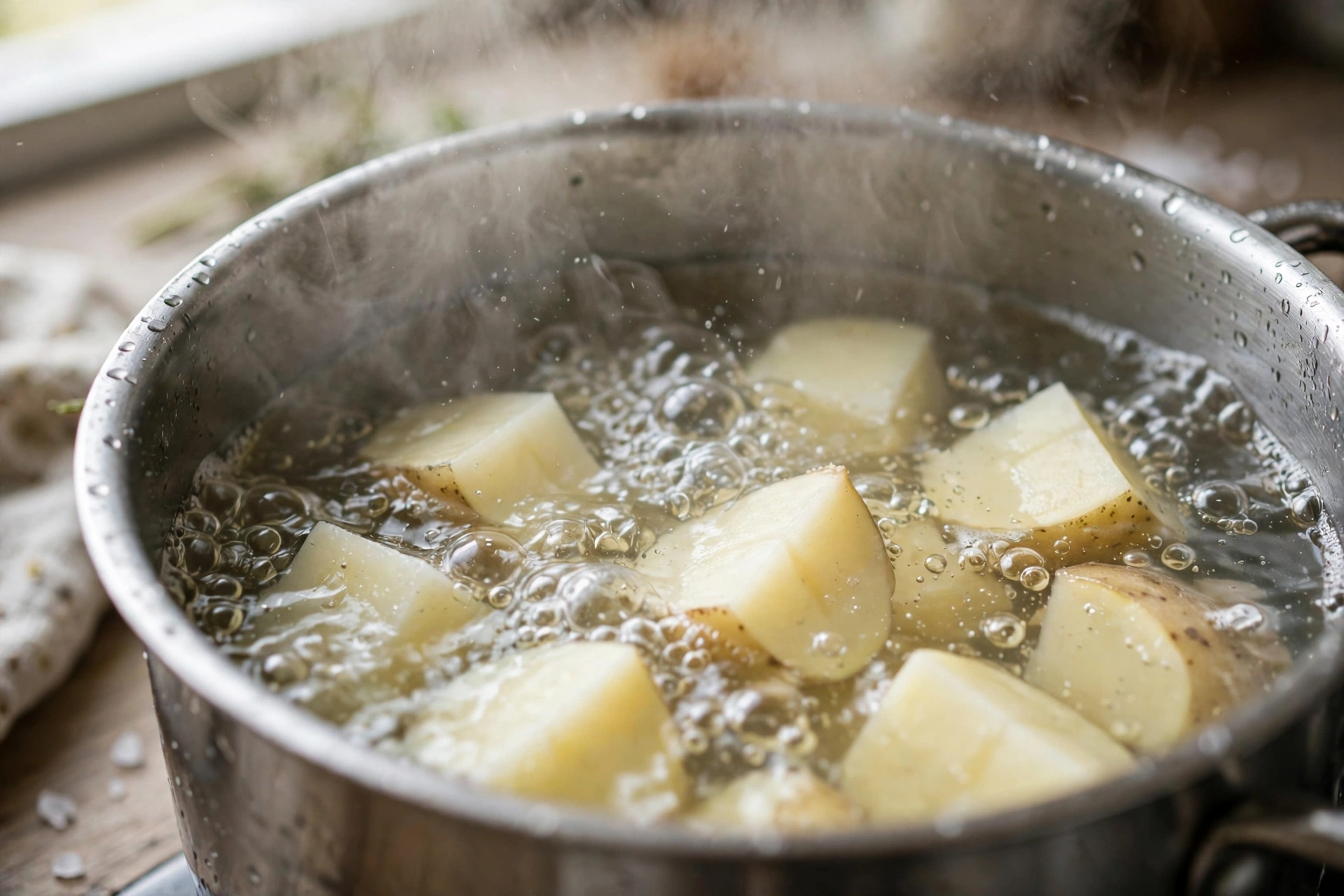
STEP 1 • PARBOIL
Parboil first
Boil until just tender, drain well, and let them steam-dry. Skipping this is why potatoes go soft.
 GoAirFry
← Crispy chicken • Fries time & temp → • Salmon →
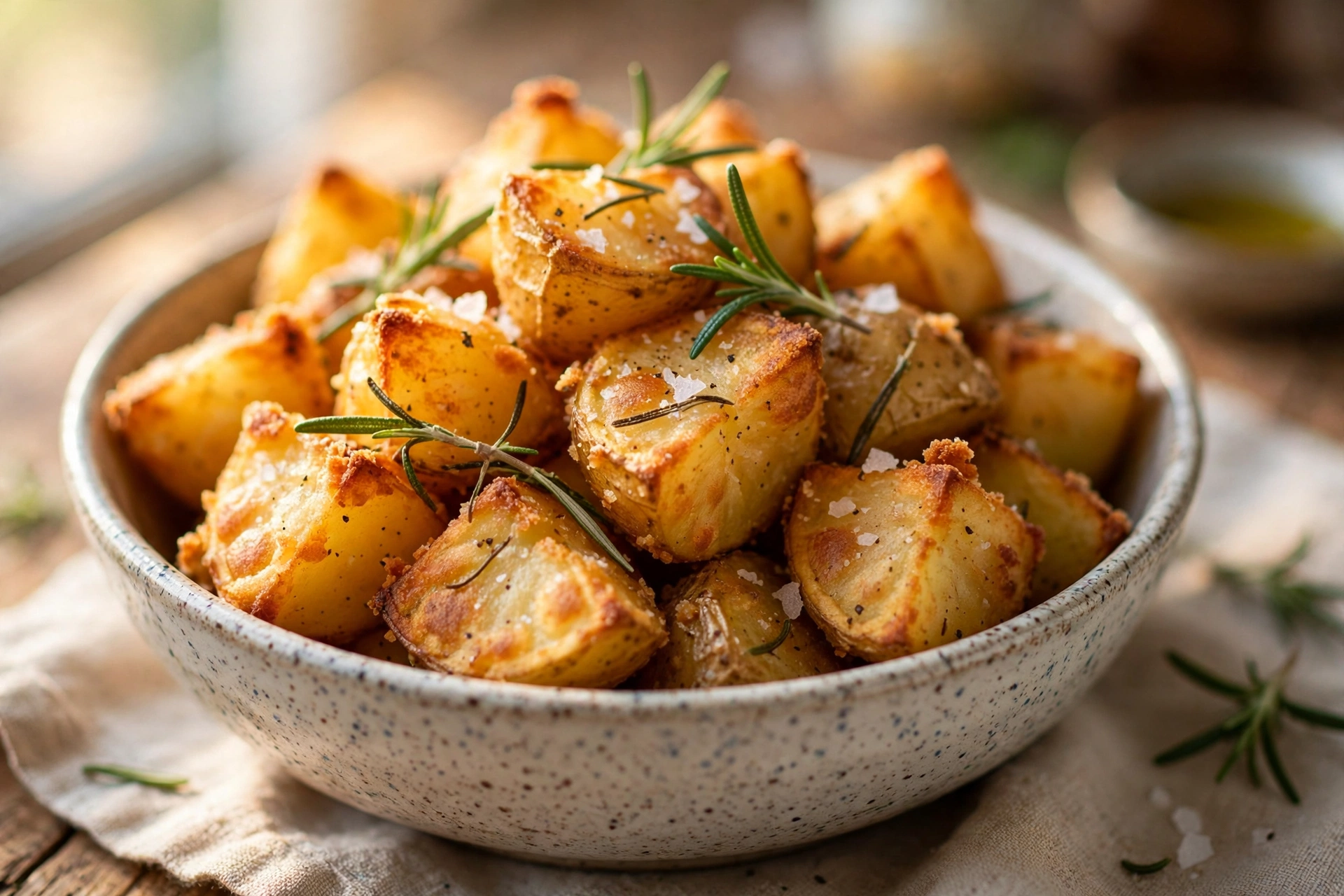
Each step is a different moment — no repeated hero photo, no machine photo.
Boil until just tender, drain well, and let them steam-dry. Skipping this is why potatoes go soft.
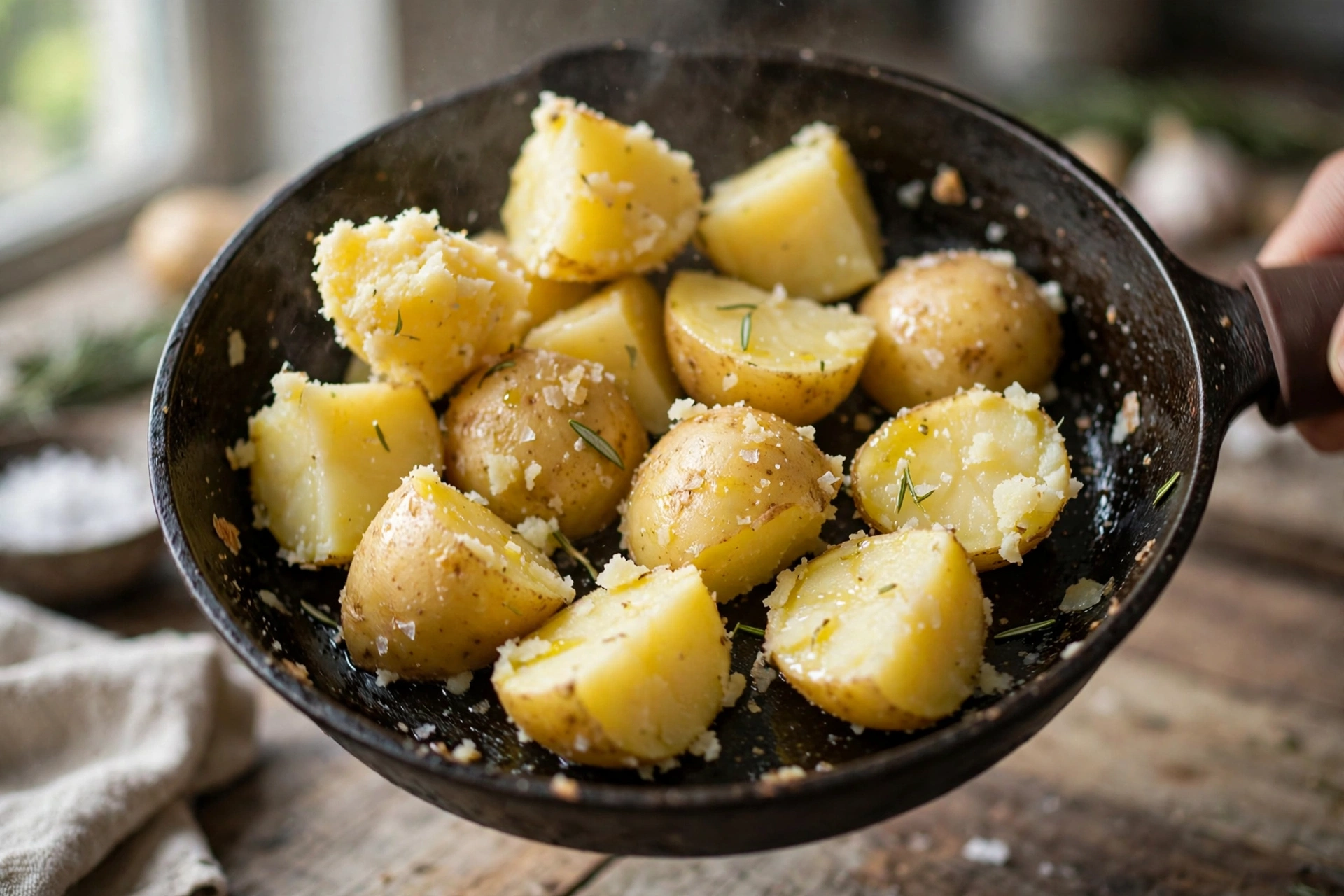
Shake the drained potatoes in the pan to rough up the edges — rough edges go crispy.
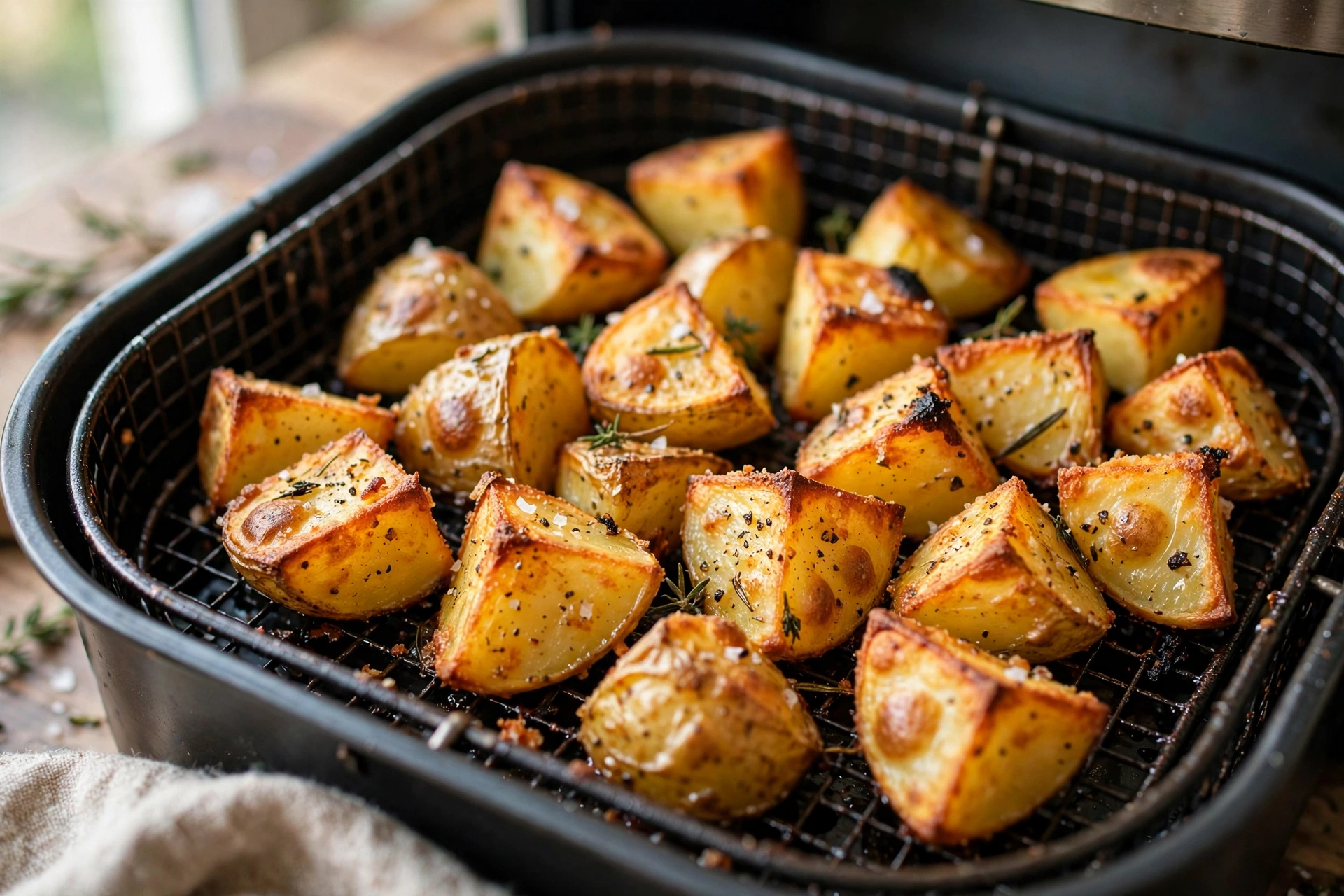
Oil lightly, single layer, shake halfway. Do not crowd.
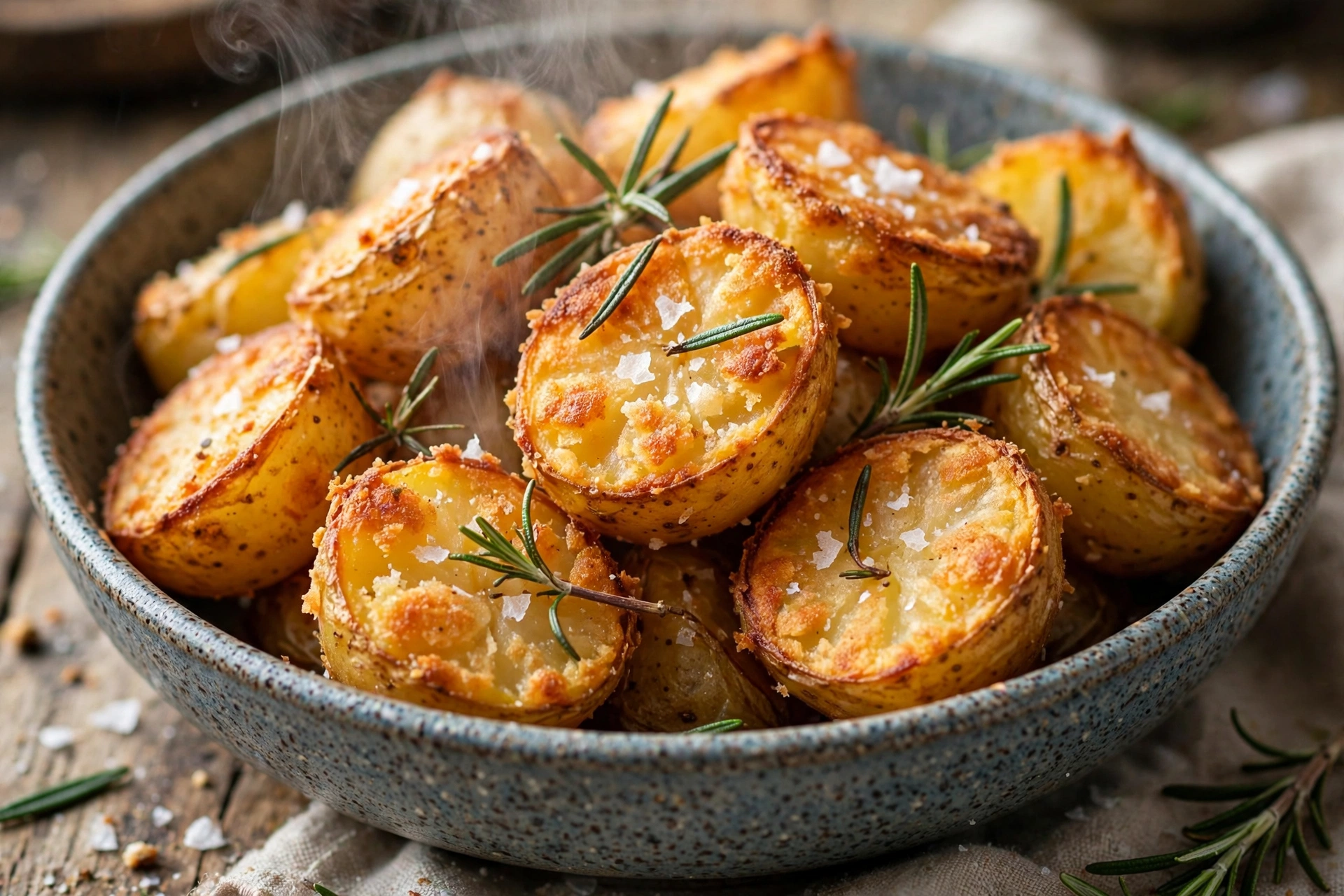
Salt and rosemary while hot, serve immediately — roast potatoes soften as they sit.
| Question | Answer |
|---|---|
| Best air fryer temp | See the recipe meta card above - US temp first, Celsius in brackets |
| Internal temp / doneness check | Check with a thermometer, not colour alone - see the time/temp table below |
| Single layer or crowded? | Single layer, always - crowding steams food instead of crisping it |
| Potato type | Result | Notes |
|---|---|---|
| Russet / Idaho (US) / Maris Piper, King Edward (UK) | Best: fluffy inside, crisp outside | High starch, breaks up nicely at the edges |
| Yukon Gold | Very good: creamy inside, good crisp | Slightly less fluffy, still excellent |
| Red potatoes | Good, but less fluffy | Waxy, so edges crisp less — cut smaller |
| New / baby potatoes | Good for a different dish | Halve them, parboil 6 min, cook 20–25 min — more like crispy smashed potatoes |
| Potato chunk | Parboil | Air fry at 400°F / 200°C | Notes |
|---|---|---|---|
| 1½-inch chunks (standard) | 8–10 min | 25–30 min | Shake halfway |
| Small chunks (1 inch) | 6–8 min | 20–25 min | Check at 20 min — they go fast |
| Large chunks (2 inch) | 10–12 min | 30–35 min | Turn twice for even colour |
| Baby potatoes, halved | 6 min | 20–25 min | Cut side down first, then flip |
Crispy chicken, salmon, roast beef, or a Sunday roast. If you cook potatoes and a main at once, a dual basket air fryer is ideal — potatoes in one basket, chicken in the other, finishing together.
Great roast potatoes are a contrast: a shattering, golden crust and a fluffy, steamy centre. Parboiling creates that contrast before the air fryer even starts. Boiling softens the outside of each chunk, and shaking the drained potatoes roughs that soft layer into fluffy edges with a huge surface area. Those edges dry out in the hot air, crisp up, and turn deep golden, while the centre stays soft because it was already cooked through in the water. Baking soda in the parboiling water helps further by breaking down the surface starch, which is why the edges fluff up more.
Potatoes: Russets in the US and Maris Piper or King Edward in the UK are the best choices, because they are high in starch and break up beautifully at the edges. Yukon Golds are a good second choice — creamier inside, slightly less fluffy. Waxy red potatoes and new potatoes do not fluff up the same way, so if that is all you have, cut them smaller and accept a less classic roast potato.
Fat: Olive oil is the simplest choice and works well. Duck fat or beef dripping give a richer, more traditional flavour, if you eat them, and they crisp at least as well. Whatever fat you use, coat every piece — a dry potato will not crisp, however hot the air fryer is. Garlic, rosemary and parmesan should wait until the last five minutes, because they burn and turn bitter over thirty minutes at 400°F / 200°C.
You need a pot for parboiling, a colander, and an air fryer. A 5–6 qt basket cooks 2 lb of potatoes for four in one batch; a smaller basket will need two batches, and the first batch loses its crunch while the second cooks unless you keep it warm in a low oven. A dual basket is ideal for a roast dinner — potatoes in one basket and chicken or salmon in the other, finishing together. For help choosing, see our best air fryer guide and the foods time and temp guide.
Roast potatoes are one of the few foods that actually improve with making ahead. Parboil, rough up and cool them up to a day ahead, then keep them uncovered in the fridge so they dry out — drier surfaces crisp better, so this step helps rather than hurts. Oil and air fry them when you need them, straight from the fridge, adding a couple of extra minutes. Leftover cooked potatoes reheat in the air fryer at 375°F / 190°C for 4–5 minutes and come back surprisingly crisp, and cold leftovers diced into a hash with onion and herbs make a genuinely good next-day breakfast.
Yes, for classic roast potatoes. Parboiling cooks the centre through and softens the outside so shaking can rough it up into crunchy edges. Without it, the outside finishes before the inside is fluffy, and the potatoes come out hard or pale.
After an 8–10 minute parboil, standard 1½-inch chunks take 25–30 minutes at 400°F / 200°C, shaking halfway. Small chunks take 20–25 minutes and large chunks 30–35 minutes, so adjust to the size you actually cut.
400°F / 200°C is the standard. It is hot enough to crisp the roughed-up edges without drying the centre, provided the potatoes were parboiled first. Lower temperatures give pale, soft potatoes rather than golden, crisp ones.
Russets in the US and Maris Piper or King Edward in the UK, because they are high in starch and break up at the edges. Yukon Golds are a good second choice, while waxy potatoes stay firmer and crisp less well.
Usually one of three things: not parboiled, not dried, or crowded in the basket. Fix those before blaming the air fryer — smooth, wet, crowded potatoes steam instead of crisping, and no temperature change will fix that.
It helps, but it is optional. A tablespoon of baking soda in the parboiling water breaks down surface starch, so the edges fluff up more and crisp better.
Yes — parboil, rough up and cool them up to a day ahead, then keep them uncovered in the fridge so they dry out. Oil and air fry them when needed, adding a couple of extra minutes, and they often come out crispier than potatoes cooked straight through.
Olive oil is simplest and works well. Duck fat or beef dripping give a richer, more traditional flavour if you eat them. The key is coating every piece — too little oil is a common reason potatoes stay pale, whatever oil you choose.
In a dual basket, yes — potatoes in one basket, chicken in the other, timed to finish together. In a single basket, cook the potatoes first and keep them warm, then cook the chicken, because crowding both together steams them.
Reheat at 375°F / 190°C for 4–5 minutes in a single layer. They come back surprisingly crisp, unlike microwaved potatoes, which go soft. Do not reheat them more than once, and add a light sprinkle of salt after reheating.
Usually because they were not oiled well enough or the basket was overfilled. Toss every piece in oil before cooking, leave space between chunks, and shake the basket halfway so pieces that touch can separate and crisp on all sides.
For the last five minutes only. Garlic and fresh herbs burn and turn bitter over thirty minutes at 400°F / 200°C, so toss them in near the end, when they flavour the potatoes without burning.
They use a similar amount of oil, so the difference is small — the main advantage is speed and a smaller, hotter cooking space for a small batch.
A 5–6 qt basket cooks 2 lb of potatoes for four people in one batch. For larger families, use a dual basket or cook in two batches, keeping the first batch warm in a low oven so it does not lose its crunch.
As an Amazon Associate, GoAirFry earns from qualifying purchases through links on this page, at no extra cost to you. Always check the retailer's site for the final price.