STEP 1 • PREP
Cut evenly, soak
Cut similar wedges, soak 20–30 minutes in cold water.
 GoAirFry
← Fries time & temp • Roast potatoes → • Best air fryer USA 2026 →
| Question | Answer |
|---|---|
| Best air fryer temp | 400°F / 200°C |
| Internal temp / doneness check | — — check with a thermometer, not colour alone, where a safe temperature applies |
| Single layer or crowded? | Single layer, always — crowding steams food instead of crisping it |
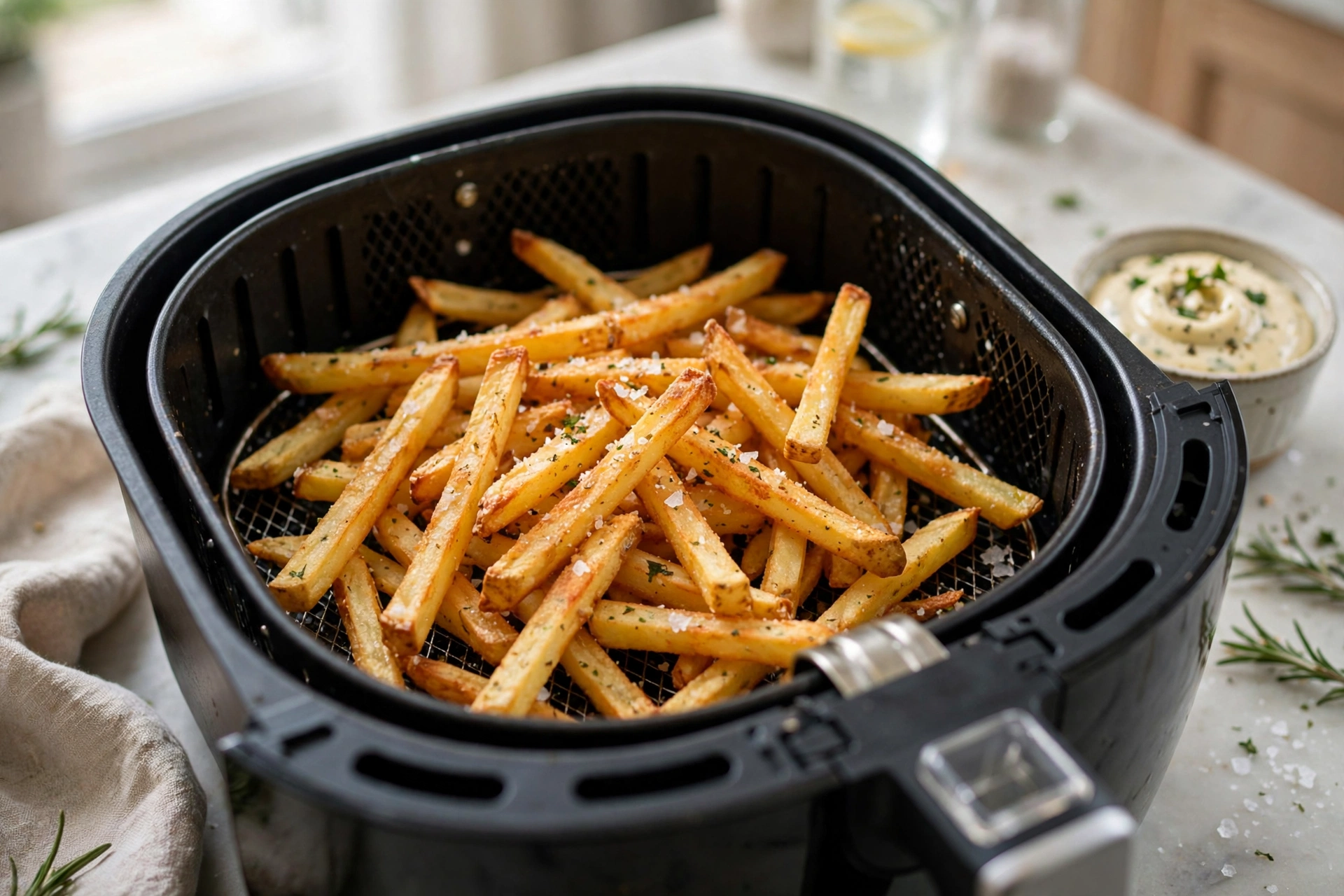
Four steps, in order — no photo is shown here, so follow the step text and the numbered method below.
Cut similar wedges, soak 20–30 minutes in cold water.
Dry with towels, toss in oil, then seasoning so it sticks.
18–22 minutes in a single layer, skin-side down where possible.
Salt or parmesan while hot, serve immediately before they soften.
Wedge thickness decides time more than potato type.
| Item | Temp | Time | Notes |
|---|---|---|---|
| Thin wedges, 1/2 inch | 400°F / 200°C | 15–18 min | Check early |
| Standard wedges, 3/4 inch | 400°F / 200°C | 18–22 min | Most common size |
| Thick wedges, 1 inch | 400°F / 200°C | 22–26 min | Flip halfway |
| Sweet potato wedges | 390°F / 199°C | 15–18 min | Watch last 3 min — sugars burn |
Wedges work in the air fryer because they have a large flat side that crisps against hot air, and a fluffy interior that needs time, not just heat. Soaking removes surface starch, drying stops steaming, and a single layer lets every wedge crisp instead of only the top layer.
Russets are best for wedges — high starch, fluffy inside, crisp outside. Yukon Golds work and are creamier, but stay slightly softer. Leave skin on for texture and fibre, and wash potatoes well first. Sweet potato wedges cook faster and burn more easily because of natural sugars, so drop the temperature slightly and check early.
You need an air fryer, a sharp knife, a bowl, and towels. A 5–6 qt basket fits about 4 potatoes in a single layer; cook in batches for a crowd rather than stacking. A mandoline is not needed — a knife and even cuts are enough. See the best air fryer guide linked below.
Potato wedges are difficult because crispness depends on three things lining up at once: even thickness, a dry surface, and enough space for steam to escape. A wedge that is thick at one end and thin at the other will always cook unevenly — the thin end burns while the thick end is still soft inside. Surface starch makes the problem worse, because starch left on the cut faces turns gummy in heat and holds moisture against the potato instead of letting it crisp. Add a crowded basket, and the wedges steam each other instead of roasting, which is why a batch that looked promising at the start can come out pale and soft even after a long cook.
The most common failure is soft wedges that never crisp, and the cause is almost always water, not temperature. Wedges that went in still wet from soaking, wedges tossed in too much oil, and wedges packed tightly together all trap steam in the same way. Too little oil causes a different failure: dry, leathery wedges that never brown properly, because there is not enough fat to carry heat across the surface. Seasoning at the wrong time adds another problem. Salt drawn out too early can pull moisture to the surface, while seasoning only at the very end leaves the inside bland even if the outside looks golden.
The fix is methodical rather than complicated. Start by cutting evenly: halve each potato lengthways, then cut each half into 3–4 wedges of similar thickness, and set aside any very thin slivers to cook separately or pull out early, because they will finish first. Soak the wedges in cold water for 20–30 minutes to remove surface starch, then drain, rinse, and dry them completely with towels. This step matters more than any seasoning — a wedge that is still damp on the surface will steam no matter how hot the basket is. Toss in just enough oil to coat thinly, then season, so the seasoning sticks to the oil rather than sliding off dry potato.
Cook at 400°F (200°C) in a preheated basket, in a single layer with skin-side down where possible and space between wedges, flipping halfway so both cut faces get direct heat. If your basket is small, cook in two batches rather than crowding one: the second batch cooked properly will always beat one large soggy batch, and you can keep the first batch warm in a low oven while the second cooks. Check the thickest wedge for tenderness, season again lightly while hot so the salt sticks, and serve at once. If wedges are still pale after the stated time, check for crowding before adding more minutes, because extra time in a crowded basket steams them further instead of crisping them. Wedges soften quickly as they sit, so do not cover them with foil or pile them in a bowl — spread them out, salt them hot, and get them to the table while the outside is still crisp.
Serve wedges with crispy air fryer chicken, burgers, air fryer chicken tenders, or as a snack with dips. They also work as a side on the 7-day air fryer menu. For a fryer that fits a family batch, see best air fryer USA 2026.
Store wedges in the fridge for up to 3 days. Reheat at 400°F / 200°C for 3–4 minutes until crisp — the microwave makes them soft. Wedges are best fresh; reheated wedges never quite match the first cook.
Soft wedges usually mean wet potatoes, uneven cuts, or crowding. Pale wedges mean too little oil or too low a temperature. Burnt seasoning means spices added too early at high heat or sweet potato cooked too long. Soggy after serving means wedges sat too long — serve at once.
Serving tip: wedges taste best straight from the basket, so time your main dish to finish at the same moment. If you must hold wedges, keep them uncovered in a warm oven for no more than ten minutes, because covering them traps steam and softens the crisp coating you worked for.
Standard wedges take 18–22 minutes at 400°F / 200°C, flipping halfway. Thin wedges take 15–18 minutes and thick wedges 22–26 minutes.
400°F / 200°C for russet wedges. Sweet potato wedges do better at 390°F / 199°C.
Yes, soak 20–30 minutes in cold water, then dry completely. Soaking removes surface starch and helps crisping.
Usually wet wedges, uneven cuts, or a crowded basket. Dry fully, cut evenly, and cook in a single layer.
Yes, flip once halfway so both sides crisp evenly.
Skin on is best for texture and holds wedges together. Wash potatoes well first.
Yes, at 390°F / 199°C for 15–18 minutes. Watch the last 3 minutes — natural sugars burn quickly.
At 400°F / 200°C for 3–4 minutes until crisp. Avoid the microwave, which softens them.
Salt, garlic powder and paprika are the base. Cajun, rosemary garlic, and parmesan herb are reliable variations.
Chicken, burgers, tenders, and dips like ketchup, ranch and sour cream.
Freeze uncooked, parboiled wedges on a tray, then bag them. Cook from frozen with extra time, checking crispness.
Usually wet surfaces, surface starch, or crowding. Soak wedges for 20–30 minutes, dry them completely, use only a thin coat of oil, and cook in a single layer at 400°F (200°C) so steam can escape instead of softening the outside.
Yes. Wedge thickness decides cooking time more than potato type, so cut each potato into 3–4 wedges of similar thickness. Pull out any very thin slivers early, because they finish before the thick wedges do.
Yes, if a single layer will not fit. A crowded basket steams wedges instead of roasting them, so two properly spaced batches will always beat one large soggy batch. Keep the first batch warm in a low oven while the second cooks.
As an Amazon Associate, GoAirFry earns from qualifying purchases through links on this page, at no extra cost to you. Always check the retailer's site for the final price. Times and temperatures here are starting points — check with a thermometer and check food early the first time you cook it in your model.