STEP 1 • PREP
Pound to even thickness
Pound the thick end to 3/4 inch so the whole breast cooks at the same rate.
 GoAirFry
← Crispy air fryer chicken • Chicken wings → • Best air fryer USA 2026 →
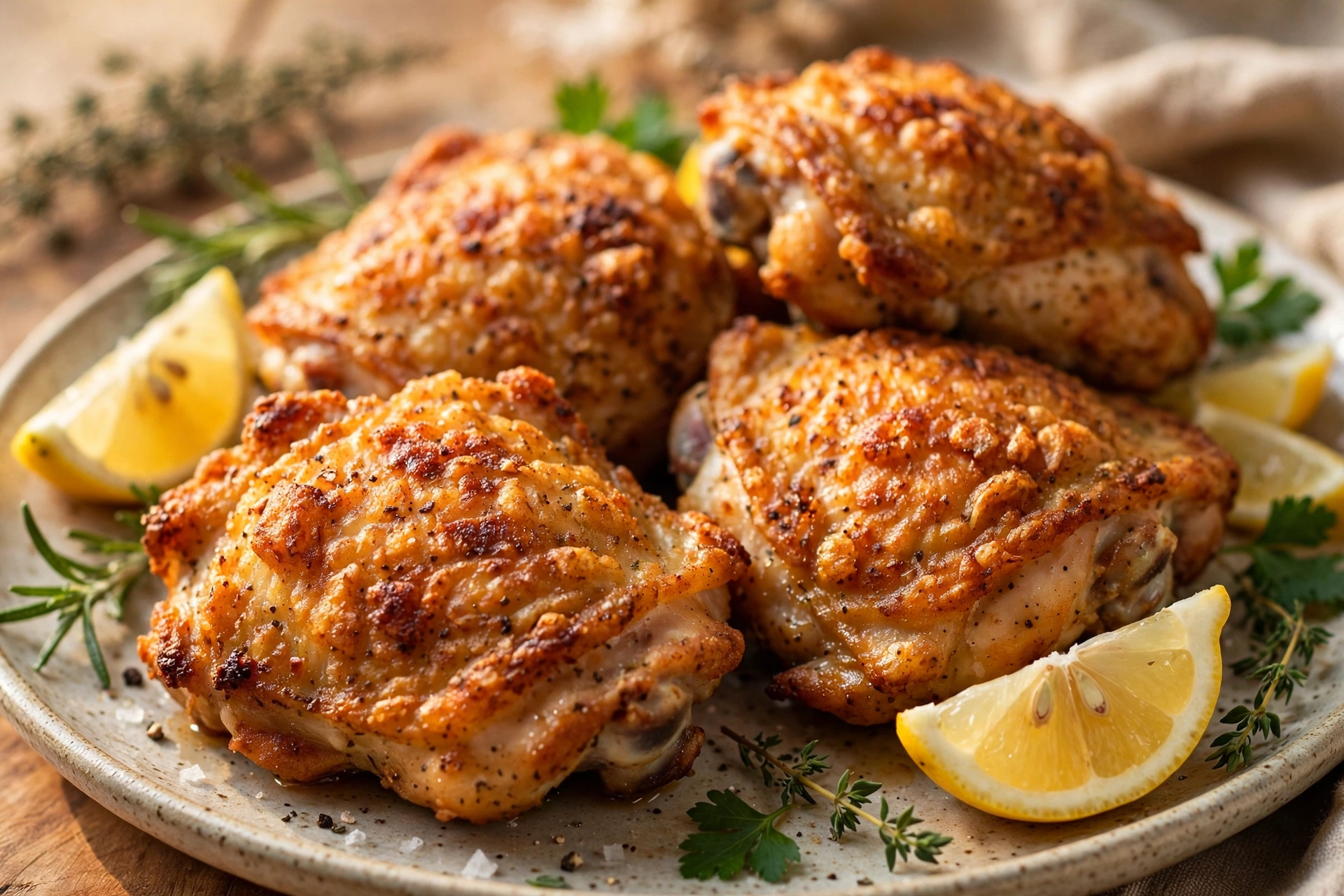
| Question | Answer |
|---|---|
| Best air fryer temp | 375°F / 190°C |
| Internal temp / doneness check | 165°F / 74°C — check with a thermometer, not colour alone, where a safe temperature applies |
| Single layer or crowded? | Single layer, always — crowding steams food instead of crisping it |
Four steps, in order — no photo is shown here, so follow the step text and the numbered method below.
Pound the thick end to 3/4 inch so the whole breast cooks at the same rate.
Rub with oil, salt, garlic and paprika, and let it sit 10 minutes.
16–20 minutes in a single layer, flipping once, to 165°F / 74°C.
Rest under loose foil, then slice against the grain.
Thickness matters more than weight. Measure the thickest part after pounding.
| Item | Temp | Time | Notes |
|---|---|---|---|
| 3/4 inch, pounded | 375°F / 190°C | 16–18 min | Most reliable result |
| 1 inch, unpounded | 375°F / 190°C | 18–22 min | Flip halfway, check thick end |
| Thin cutlets, 1/2 inch | 375°F / 190°C | 10–12 min | Check early |
| Bone-in breast | 375°F / 190°C | 25–30 min | Check near bone, 165°F / 74°C |
Breast is lean, so it has no fat to forgive overcooking. Pounding to even thickness, a slightly lower temperature than wings, and a proper rest are what keep it juicy. The air fryer helps because hot air cooks evenly around a single layer, but it cannot fix an uneven breast or a skipped rest.
Boneless, skinless breast is the weeknight standard, but bone-in breast stays juicier and suits a Sunday-style meal. If breasts vary a lot in size, pound the large ones and cook small ones separately, or pull small ones out early. A simple brine — salt water for 30 minutes — can help very large breasts, but it is optional and not needed for pounded breasts.
You need an air fryer, a meat mallet or rolling pin, parchment, tongs, and a food thermometer. A 5–6 qt basket fits four breasts in a single layer. A thermometer is not optional for breast — colour alone is unreliable. See the best air fryer guide linked below if you are choosing a size.
Chicken breast is difficult because it is not one even piece of meat. A whole breast is thick at one end and thin at the other, so the thin tail can be overcooked and dry before the thick end reaches a safe temperature. Breast also has very little fat to protect it, which means there is almost no margin for error: a few minutes too long, or a few degrees too high, and the juices are gone. Unlike a thigh, which stays forgiving when it goes past its target, breast dries out quickly and cannot be rescued by sauce afterwards. That is why two breasts cooked for exactly the same time can still come out differently — one was thicker, one was colder from the fridge, or one sat closer to the heating element.
The most common failure is a breast that is dry on the outside and still undercooked in the middle, or one that reads done at the thin end but is pink at the thick end. Slicing straight from the basket makes it worse. Hot juices are still moving inside the meat, and cutting too soon lets them run out onto the board instead of settling back through the breast. Another quiet failure is checking temperature in the wrong place. A thermometer pushed into the thin end, or one that touches the basket or a bone in a bone-in breast, gives a misleading reading and can make you pull the breast too early or leave it in too long.
The fix starts before cooking, not during it. Pound the breast to an even thickness of about 3/4 inch, working the thick end down rather than flattening the whole piece, so every part cooks at the same rate. Let the breast sit at room temperature for 15 minutes if you can, season all sides, and preheat to 375°F (190°C) rather than blasting it at 400°F (200°C), which dries the surface before the centre catches up. Cook in a single layer and flip halfway. Start checking early, and put the thermometer into the centre of the thickest part, from the side, away from bone and basket. Remove the breast promptly when it reaches 165°F (74°C), rest it for 5 minutes under loose foil, and only then slice against the grain. Resting is not wasted time: it lets juices redistribute, so the slices stay moist instead of dry and stringy.
If a breast still comes out dry, do not simply cook the next one for less time and hope. Check thickness first, because an unpounded 1-inch breast needs a different time from a pounded 3/4-inch one, and check thermometer placement second. A breast that was dry at the thin end but undercooked at the thick end was uneven, not overcooked overall, and pounding fixes that better than changing the temperature.
Serve sliced breast with crispy air fryer roast potatoes, rice, salad, or air fryer vegetables. It is also ideal sliced cold for wraps, grain bowls, and the 7-day air fryer menu. For a fryer that fits a family batch, see best air fryer USA 2026.
Store cooked breast in the fridge for up to 3 days. Reheat gently at 350°F / 175°C for 3–4 minutes, or eat cold sliced — reheating too hot dries it again. Freeze sliced breast for up to 2 months in a sealed bag.
Dry breast usually means uneven thickness, too high a temperature, or no rest. Rubbery texture means undercooking — check 165°F / 74°C. Bland breast means seasoning only on top — season all sides and let it sit 10 minutes before cooking. Sticking means a cold basket — preheat and lightly oil the basket.
Pounded 3/4-inch breasts take 16–18 minutes at 375°F / 190°C. Thicker, unpounded breasts take 18–22 minutes.
375°F / 190°C. It is lower than wings because lean breast dries quickly at 400°F / 200°C.
Yes, flip once halfway so both sides cook evenly and brown without drying one side.
Usually uneven thickness, too high a heat, or slicing without resting. Pound even, cook at 375°F / 190°C, and rest 5 minutes.
Yes, pound the thick end to about 3/4 inch. It is the most reliable way to get juicy, even cooking.
165°F / 74°C in the thickest part. Pull it at 165°F, not beyond, and rest before slicing.
It is possible but uneven and not recommended for breast. Thaw in the fridge overnight for a juicy result.
Gently at 350°F / 175°C for 3–4 minutes, or eat it cold sliced. High heat on reheating dries it again.
Yes, it is lean protein cooked with very little oil. The seasoning and sides matter more than the cooking method.
Roast potatoes, rice, salad, roasted vegetables, wraps, and grain bowls all work well.
Yes, cook a batch, cool within 2 hours, and keep sliced breast in the fridge for up to 3 days.
The breast is naturally uneven, so the thin tail overcooks before the thick end is done. Pound the thick end to about 3/4 inch so the whole breast cooks at the same rate, and check temperature in the centre of the thickest part.
Insert it from the side into the centre of the thickest part, away from bone and the basket. A reading from the thin end or near bone can mislead you, so check the thickest spot and look for 165°F (74°C).
Rest it for 5 minutes under loose foil before slicing. Cutting straight from the basket lets hot juices run out onto the board, while resting lets them settle back through the meat so the slices stay moist.
As an Amazon Associate, GoAirFry earns from qualifying purchases through links on this page, at no extra cost to you. Always check the retailer's site for the final price. Times and temperatures here are starting points — check with a thermometer and check food early the first time you cook it in your model.