STEP 1 • CHOOSE
Choose even potatoes
Choose even, medium baking potatoes. Even size means they finish at the same time.
 GoAirFry
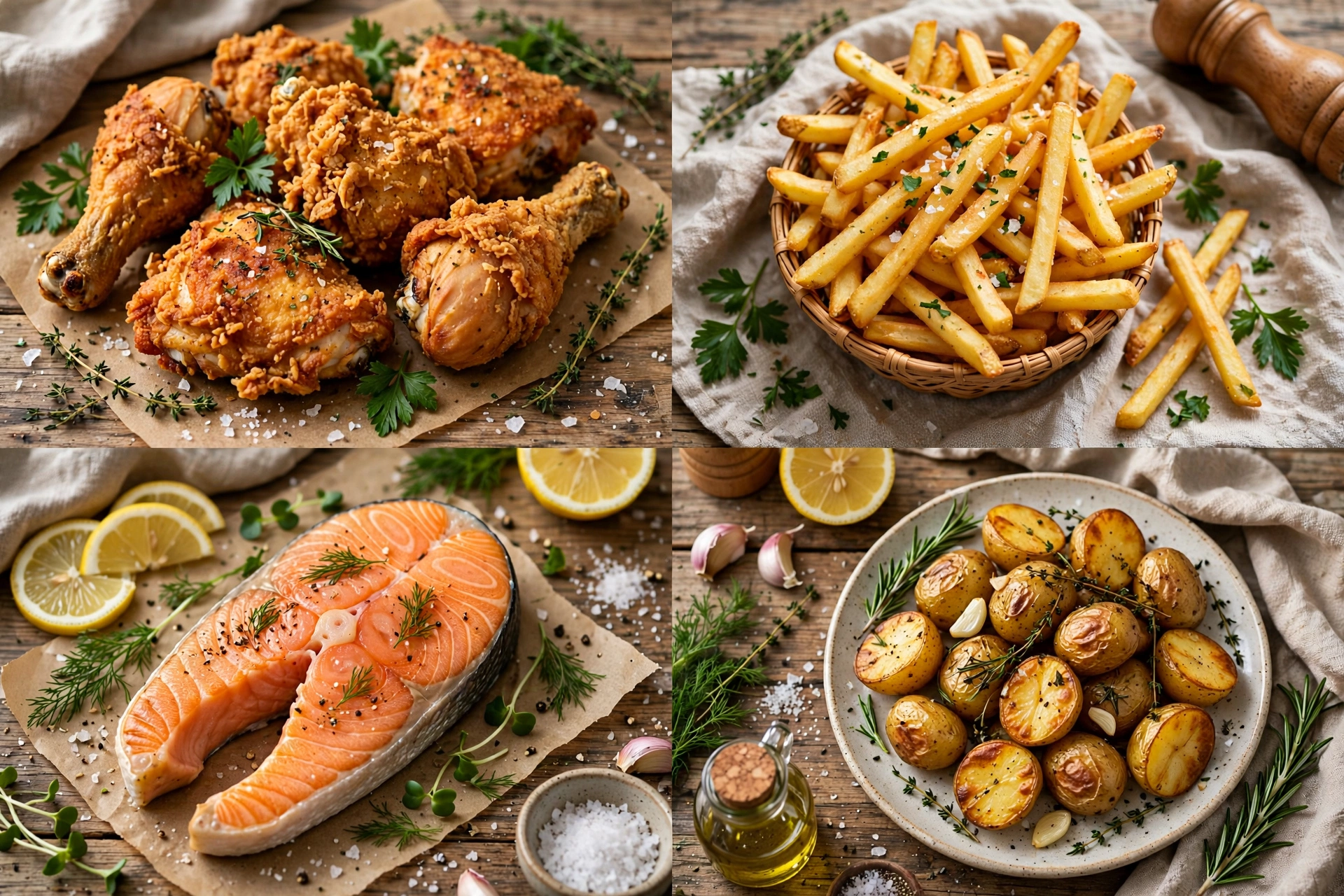
Four moments to check as you cook, in order.
Choose even, medium baking potatoes. Even size means they finish at the same time.
Prick all over with a fork, rub with oil and salt. Oil and salt are what make the skin crisp, not just hot air.
400°F / 200°C for 45–60 minutes, turning once. Jacket potatoes need time — there is no shortcut that keeps the skin crisp.
Rest 5 minutes, split open, and fluff the inside with a fork before adding toppings.
| Question | Answer |
|---|---|
| Best air fryer temp | 400°F / 200°C |
| Doneness check | Skin crisp and crackling, inside fluffy when forked |
| Single layer or crowded? | Single layer, always — crowding steams food instead of crisping it |
Size matters more than anything else for jacket potatoes — a large potato can need 20 minutes more than a medium one.
| Potato size | Temp | Time | Notes |
|---|---|---|---|
| Small, 6 oz (170g) | 400°F / 200°C | 40–50 min | Check at 40 min, skin should crackle |
| Medium, 8 oz (225g) | 400°F / 200°C | 50–60 min | The standard baking potato size |
| Large, 12 oz (340g) | 400°F / 200°C | 60–75 min | Turn twice, check with a skewer |
| Very large, 14 oz+ | 400°F / 200°C | 70–85 min | Or microwave 5 min first, then air fry 40 min |
Choose baking potatoes, not waxy potatoes — varieties sold as baking, russet, or King Edward are best, as they have a dry, fluffy texture when cooked. Waxy potatoes, like new potatoes, stay dense and waxy inside, even after a long cook, and they will not give the fluffy centre that makes a jacket potato. Choose potatoes of similar size, with firm, unblemished skin and no green patches or sprouts. Green patches should be cut away, and sprouted potatoes should be avoided, as they can taste bitter.
The difficult part of jacket potatoes is the skin-versus-inside balance — getting a skin that is crisp and crackling without drying out the inside, and an inside that is fluffy, not dense or hard. It fails when the potato is cooked too fast, or wrapped in foil, or not oiled and salted. Foil, which many people use out of habit, steams the skin and makes it soft, which is the opposite of a jacket potato. Cooking at a lower temperature for a shorter time leaves the skin pale and the centre hard. The fix is a long, hot, uncovered cook: 400°F / 200°C for 45–60 minutes, with oil and salt on the skin, turning once, and checking with a skewer, not by squeezing alone.
Jacket potatoes are a Bonfire Night and winter staple, served hot, split open, with butter first — butter melts into the fluffy inside and carries every other topping — then the topping of choice. They work as a main with a salad, or as a filling supper on their own, and they are easy to serve for a crowd: cook them in batches, keep the finished ones warm in a low oven, uncovered, and let guests choose their own toppings. For Bonfire Night, they are traditionally eaten outdoors, wrapped in foil only after cooking, not during, so the skin stays crisp until the last moment.
Jacket potatoes are best eaten fresh, within 15 minutes of cooking, while the skin is still crisp. If you must keep them, cool them on a rack, store in the fridge for up to 3 days, and reheat at 400°F / 200°C for 10–12 minutes until hot through and the skin crisps again. Do not store cooked potatoes in foil while warm — trapped steam softens the skin. Uncooked potatoes keep for weeks in a cool, dark place, so there is rarely a reason to cook them far ahead.
This method works because it gives the potato what it needs: time, heat, and a dry, uncovered skin. At 400°F / 200°C, hot air crisps the oiled, salted skin steadily, while the long cook lets heat reach the centre and turn the starch fluffy. Pricking lets steam escape, so the potato does not burst and the skin does not go soggy from trapped steam.
Potato size is the biggest variable: a 6 oz potato and a 12 oz potato can be 20 minutes apart, so always check with a skewer, not by time alone. If you are short on time, microwave the potatoes for 5 minutes first, then air fry for 40 minutes — the skin will still crisp, though it will be slightly less crackling than a full air fryer cook. Oil choice matters less than amount: olive oil, vegetable oil, or rapeseed oil all work, as long as the skin is evenly coated. Coarse salt gives a better crunch than fine salt, which can dissolve into the oil and disappear.
You need an air fryer, a fork for pricking, a knife, and an oven glove for handling hot potatoes. A 5–6 qt basket fits 2–4 medium potatoes at a time, depending on size, so a family batch usually needs two rounds. A dual basket helps if you are cooking potatoes and a topping, like roasted vegetables, at the same time.
400°F / 200°C for 45–60 minutes for medium potatoes, turning once.
50–60 minutes for an 8 oz potato, 40–50 minutes for a small one, and 60–75 minutes for a large one.
No — foil steams the skin and makes it soft.
Usually no oil and salt, or foil, or a short cook.
Baking potatoes, russet, or King Edward — dry, fluffy varieties. Waxy potatoes stay dense inside, even after a long cook.
Yes, 8–10 times all over with a fork, so steam can escape. Unpricked potatoes can burst as steam builds up inside.
Yes — microwave for 5 minutes first, then air fry for 40 minutes. The skin will still crisp, though it will be slightly less crackling than a full air fryer cook.
Butter, cheese, baked beans, tuna mayonnaise, coleslaw, chilli, sour cream and chives, and roasted vegetables. Butter first, so it melts into the fluffy inside.
They are best fresh, but they keep in the fridge for up to 3 days and reheat at 400°F / 200°C for 10–12 minutes until the skin crisps again.
It needs more time, not more heat. Cook for another 10 minutes and check with a skewer. If the skin is already dark, cover loosely with foil for the last 10 minutes.
Potatoes themselves are rich in fibre, potassium, and vitamin C, especially with the skin on. The toppings decide how light or rich the meal is — beans and vegetables keep it lighter.
In a dual basket, yes — potatoes in one basket, roasted vegetables in the other. In a single basket, cook the potatoes first, as they take much longer than most toppings.
The skin should be crisp and crackling, and a fork or skewer should go into the centre easily, with no hard resistance. Squeezing alone is not reliable.
A 5–6 qt basket fits 2–4 medium potatoes per batch. For a family, plan on two batches, or cook them ahead and keep them warm in a low oven, uncovered.
As an Amazon Associate, GoAirFry earns from qualifying purchases through links on this page, at no extra cost to you. Always check the retailer's site for the final price.